
25 Scuba Diving Coloring Pages - Free!
Recreational Activities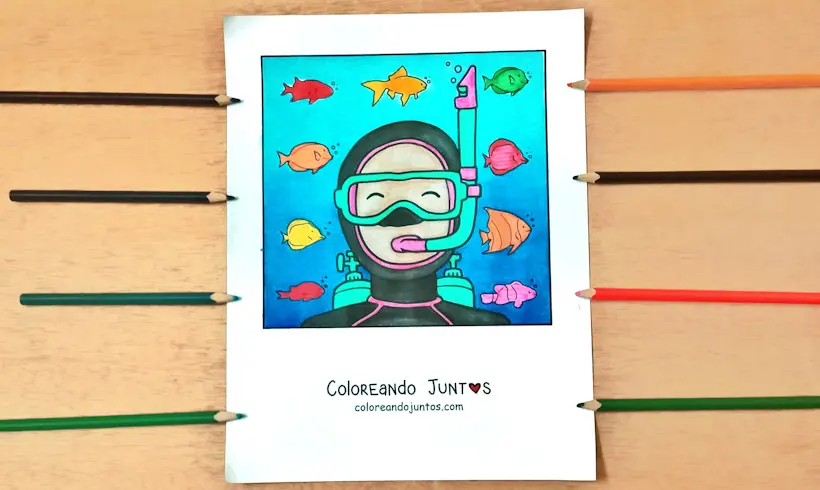
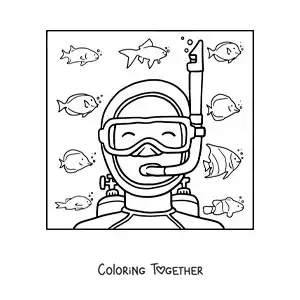
This diver has gone very deep into the sea, and came across very strange creatures while doing this activity. Do you not think it is the most colorful diver you have ever seen? Our artists put in a lot of effort when painting it!
At Coloring Together we were thinking of going scuba diving, but we cannot go without preparing beforehand. So we all started researching and came across beautiful scuba diving coloring pages, and scuba diving drawings for kids that taught us a lot about this activity.
Scuba diving should be done with supervision, but it offers an incredible experience, because you can swim and see the whole marine world that exists below the surface. Does that not sound great? That is why we could not ignore this recreational activity and decided to create a gallery for it.
To paint these cute divers you can use the pointillism technique, after all, it is a simple technique with incredible results. Do you want to take a little risk? Then dare to make a gradient with watercolors.
Wait! When you travel into the depths of this page you will come across a gallery where we showcase the creations of our visitors. Go for it, print and color a drawing and send us your scuba diving pictures to color when you finish painting!
If you keep going down and down into the depths of this sea, you will find something very peculiar, they are scuba diving coloring pages! Ready to help you return to the surface and emerge as a skilled and experienced artist. Ready for a journey under the sea?
Scuba Diving coloring pages
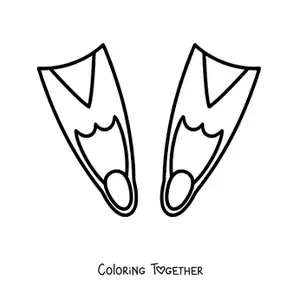
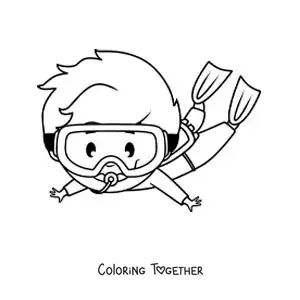
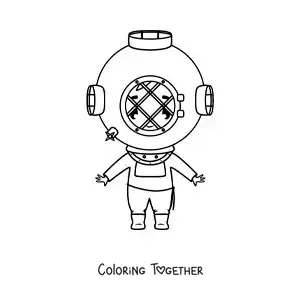
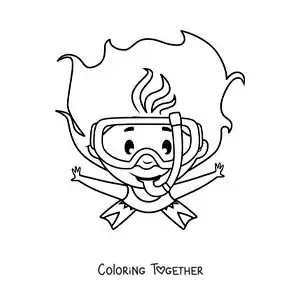
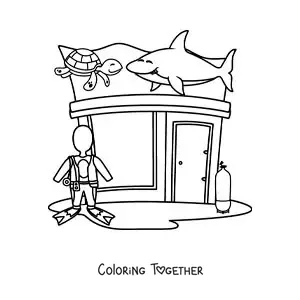
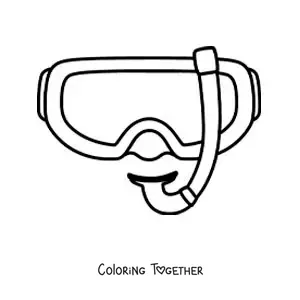
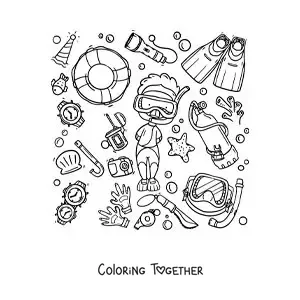
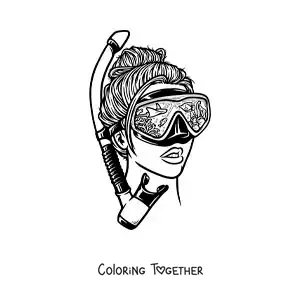
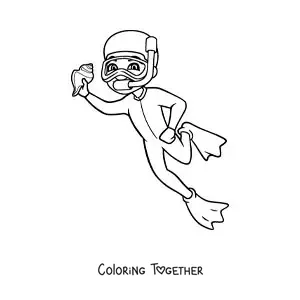
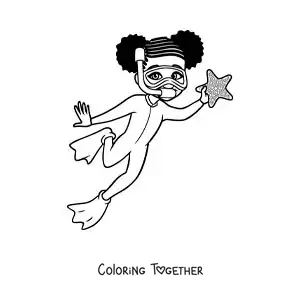
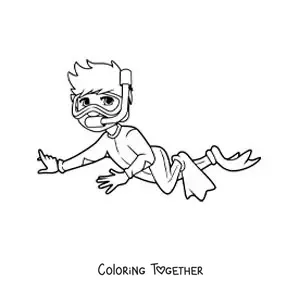
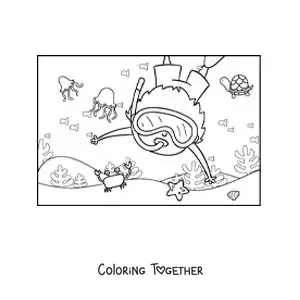
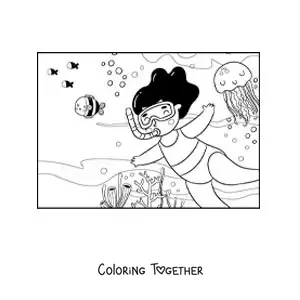
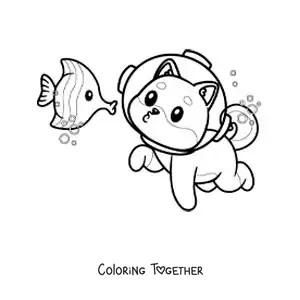
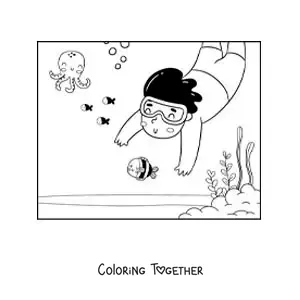
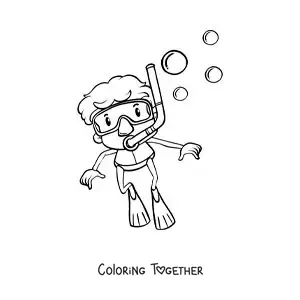
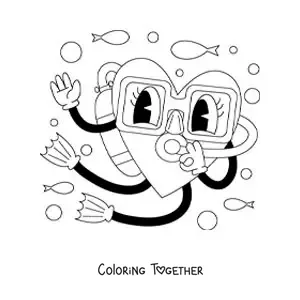
Why color scuba diving pictures?
Scuba diving is an activity that consists of exploring the underwater world with the help of specialized equipment. Scuba diving can have recreational, scientific, professional or sporting purposes, and offers the chance to discover the beauty and diversity of marine life.
To practice scuba diving, you need basic equipment that includes a compressed air tank, a regulator, a buoyancy vest, a thermal suit, fins, a mask and a dive watch or computer.
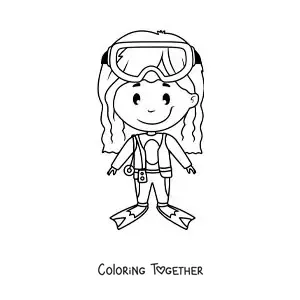
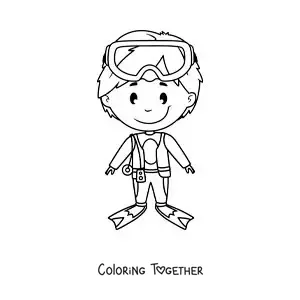
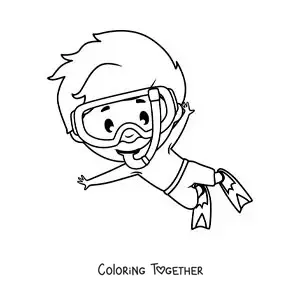
Scuba diving requires proper training and respect for safety rules. Fortunately, at Coloring Together we made a gallery with printable scuba diving coloring pages that will help us learn more about this recreational activity.
If you wonder how they can help, well, by learning with the fun facts they carry! Plus, if you get nervous before diving in, coloring is a good activity, do you not think? Let us do it together!
Learn while coloring Scuba Diving
- Scuba diving has a thousand-year history. Evidence of diving techniques has been found in ancient civilizations like the Egyptian and the Greek.
- Cold spreads 25 times faster in water than in air. That is why divers must wear thermal suits to keep their body temperature.
- Scuba diving is a practice that is good for your health, since it improves mood, coordination, circulation and oxygen consumption.
- The equipment used to dive is called an air tank, not an oxygen tank, and it contains normal compressed air, with 80% nitrogen and 20% oxygen.
- Sound travels about 5 times faster in water than in air, which makes it hard to tell where it comes from underwater.
- The first diver in history was part of a daring scientific experiment, to test a prototype diving suit in 1602 and he tested it before King Philip III in the Pisuerga river. Fortunately, it was a successful experiment, and the diver stayed under for 60 minutes.
- The first diving helmet was created by the brothers Charles Anthony Deane and John Deane in 1823, originally as a helmet for firefighters, but later they adapted it for use underwater and patented it in 1826.
- When you are scuba diving you do not use your hands to swim, it is not necessary! The movement of the fins is enough, that way you save energy. The hands are used only to turn.
- Have you heard that more than 60% of marine species have nocturnal habits? That is why many divers choose night diving.
- Scuba diving is an activity that is good for your health, since, when diving, you move your muscles without tiring out, because the water creates buoyancy. Plus, the muscles work harder because the water offers resistance.
- The first rubber fins were invented by Louis de Corlieu, a French naval officer, in 1932.
- The first underwater zoo in the world is located in Eilat, Israel, and lets visitors observe more than 800 marine species through underwater windows or with diving equipment. It was founded in 1974.
- The world record for depth in scuba diving (with equipment) belongs to Ahmed Gabr, an Egyptian who descended to 332 meters in the Red Sea in 2014.
- The world record for depth in free diving (without a tank) belongs to Herbert Nitsch, an Austrian who descended to 214 meters in the Mediterranean Sea in 2007.
- Do you know what happens when you go up to the surface holding your breath? When this happens, the pressure in the lungs decreases and the volume of air we have in them increases, so the air can escape into the blood or other parts of the body.
- The world record for time underwater belongs to Cem Karabay, a Turk who stayed submerged for 142 hours and 42 minutes in a pool in Cyprus in 2016.
- Jacques Cousteau, a French oceanographer who explored the seas for more than 60 years, made numerous documentaries, books and inventions related to scuba diving. For example, he is the co-inventor of the Aqua-Lung, a breathing device for diving.
- The Galapagos Islands are considered the best place to dive, did you know that? Thanks to their abundant marine life, as well as being one of the best preserved places.
- The most dangerous place to dive is the blue holes, vertical underwater caves in Egypt. It is known as “the divers' graveyard”.
- The title of the oldest diver in the world belongs to William Lambert, who broke the record by diving at 100 years old. Amazing!
- Did you know that the time limit for how long you can stay underwater is not determined by oxygen? That is determined by the absorption of dissolved nitrogen, which depends on the depth.
- If you went diving, then do not get on a plane too soon! It is not advisable because the dissolved nitrogen in our body can turn into bubbles in the blood, due to the drop in pressure from the altitude.
More Recreational Activities Coloring Pages
-
Camping Coloring Pages
-
Circus Coloring Pages
-
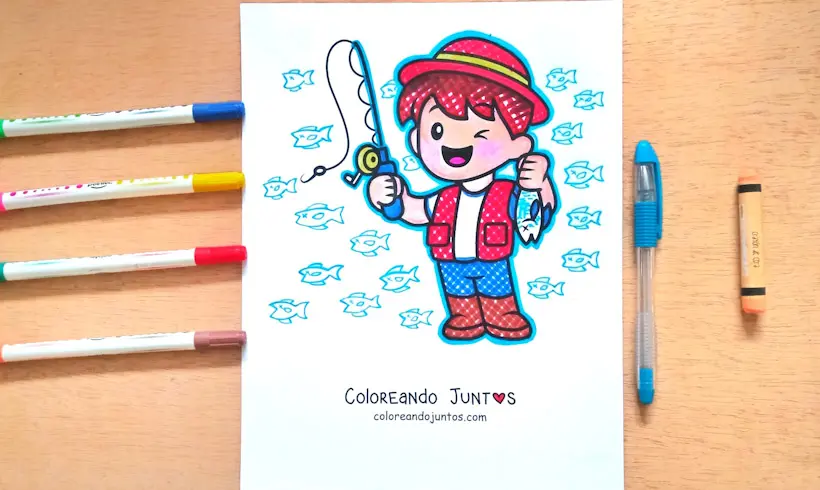
Fishing Coloring Pages
-
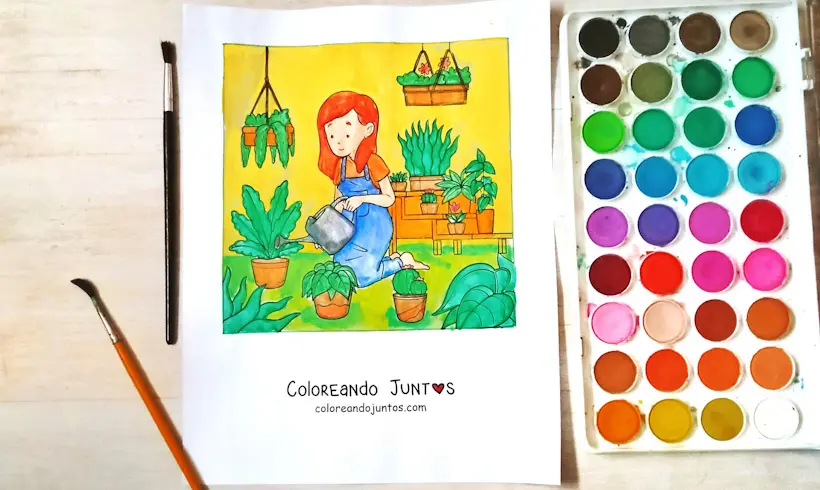
Gardening Coloring Pages
-
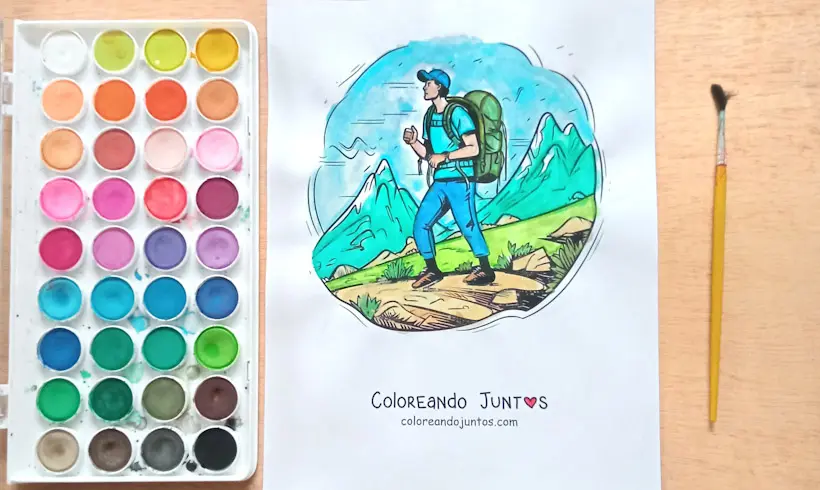
Hiking Coloring Pages
-
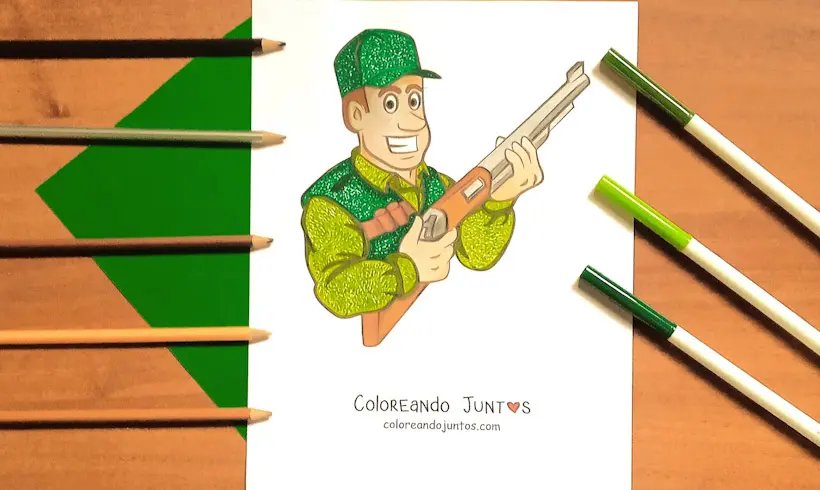
Hunting Coloring Pages
-
Meditation Coloring Pages
-
Movie Coloring Pages
-
Picnic Coloring Pages
-
Reading Coloring Pages
-
Shopping Coloring Pages
-
Surfing Coloring Pages
-
Swimming Pool Coloring Pages
-
Travel drawings
-
Walk Coloring Pages
-
Yoga Coloring Pages
-
Zoo Coloring Pages