Paint with a Toothbrush: Features and Tricks for Applying It
Here at Coloring Together, we were tossing out the old materials that are no longer good for painting, and before we knew it, we were left with nothing! Everything was so worn out that you couldn't paint with it, so what do we paint with?
Luckily, artists are known for being very creative, so we thought about painting with a material everyone has at home; a worn-out tool that can be reused. A toothbrush!
Come check out this section, where we'll teach you how to color with a toothbrush and how to apply the spatter technique. Don't you think that's a great reason to color? Then let's get started!
What is the brushing or spatter technique?
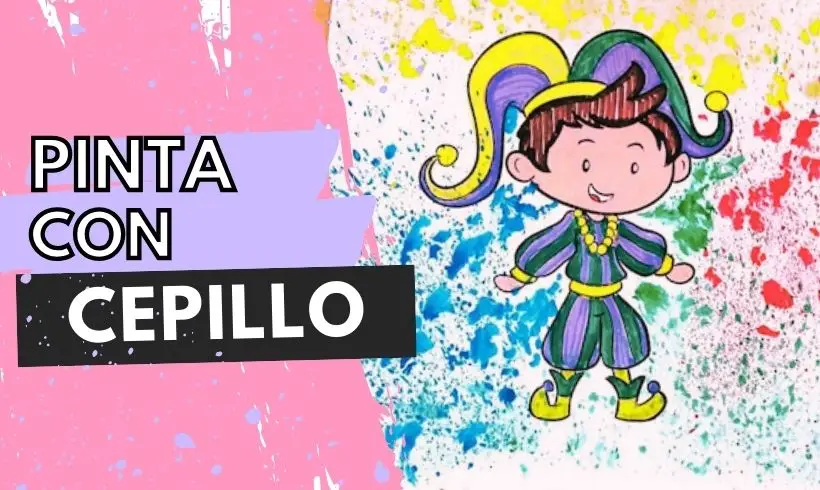
Spattering with a toothbrush is an art technique used to create textures and visual effects in a work of art. This technique can be especially effective for creating a rain, snow or dust effect in a painting, you just have to know how to apply it.
The brushing technique is done with a toothbrush (or a similar tool) that is loaded with paint and tapped with your fingers along the edges so the paint comes out as spatters. This technique can be used to create a variety of effects, most of them with abstract results, although it can be used to create a rain or snow effect.
Since it's such a versatile technique, it can be applied on many surfaces, including canvas, paper, wood and other substrates. So you have no limits when it comes to this technique! All you need is a toothbrush and paint.
Why is painting with the brushing technique beneficial?
One of the reasons this technique is great is because it lets you create a unique, random texture that can be hard to achieve with other techniques. When you spatter the paint with a toothbrush, the pigment scatters irregularly, which creates a spatter pattern that can be really interesting and appealing.
Another reason this technique is great is because it's very easy to do and doesn't require advanced artistic skills. Anyone can do it and get amazing results with a little practice.
Plus, this technique can be really fun and relaxing. The process of spattering the paint can be very rewarding and can help relieve stress and anxiety.
How to paint with a toothbrush
Go find the oldest toothbrush you have! In this section we'll teach you step by step how to color with a toothbrush. It's time to learn how to recycle, and to make art with what's around us.
Step 1: Color the parts where you won't use the brushing technique
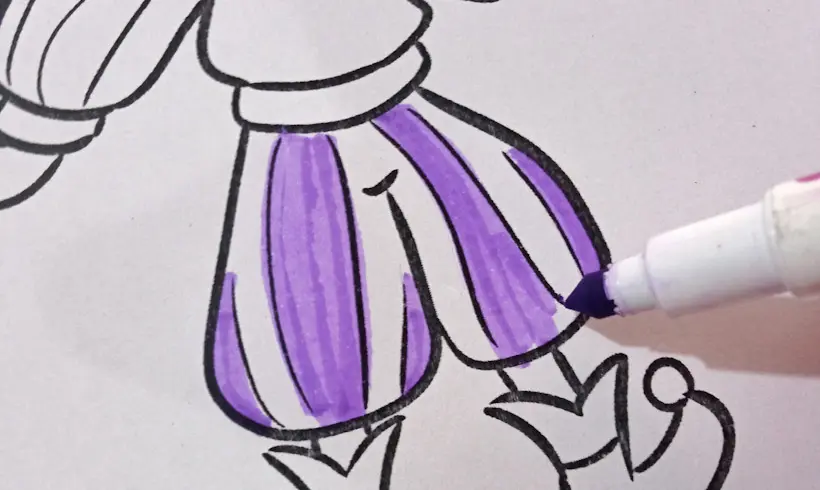
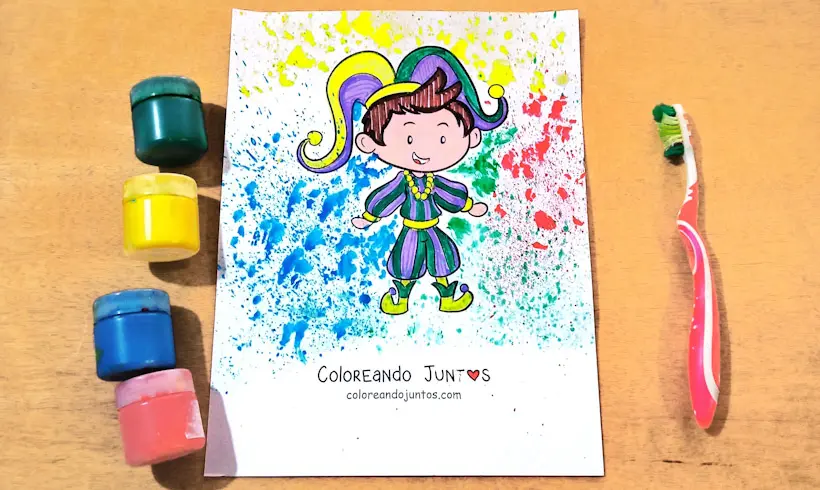
If you want to color some parts of your drawing without the brushing technique, then that's the first thing you should do. In this case, we painted the boy with colored markers before using the paint and the toothbrush. This is done to avoid staining the drawing with spatters in areas you don't want.
Step 2: Use sheets of paper to cover the areas you don't want to spatter
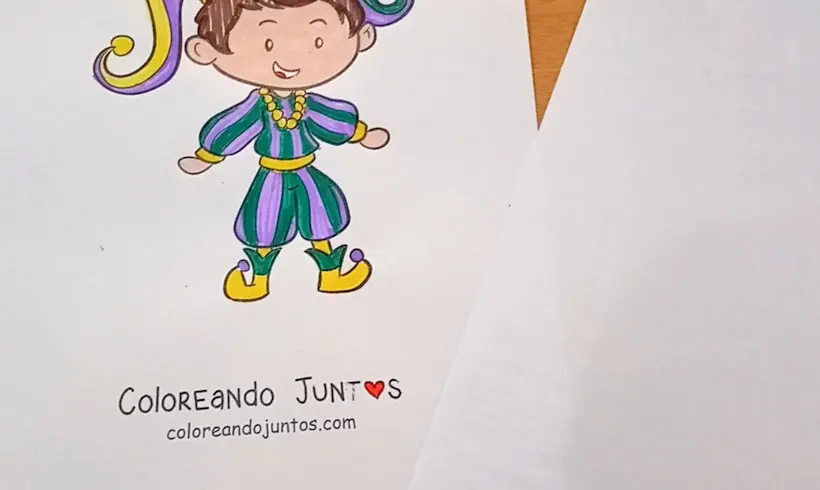
If you don't want to paint your whole drawing with the spatter technique, then use white sheets of paper to cover the area you want to protect. In this case, we only wanted to apply the brushing to the background, so we covered the character with several white sheets of paper.
Step 3: If the paint is too thick, use a little water
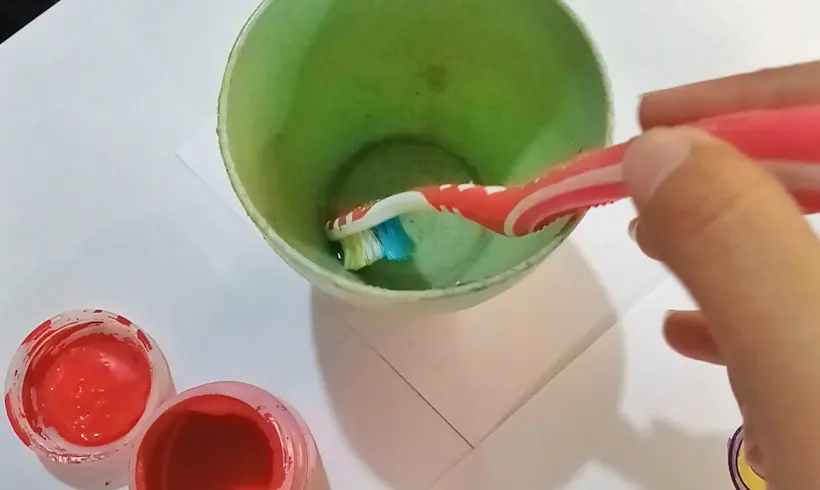
If your paint is thick, like tempera, it might not spatter when you tap the sides of the brush, or when you run your finger over the bristles. For that, first wet the brush and, without drying it, pick up the paint, and you'll see it spatters much more easily.
Step 4: With your finger, spatter the paper with the toothbrush
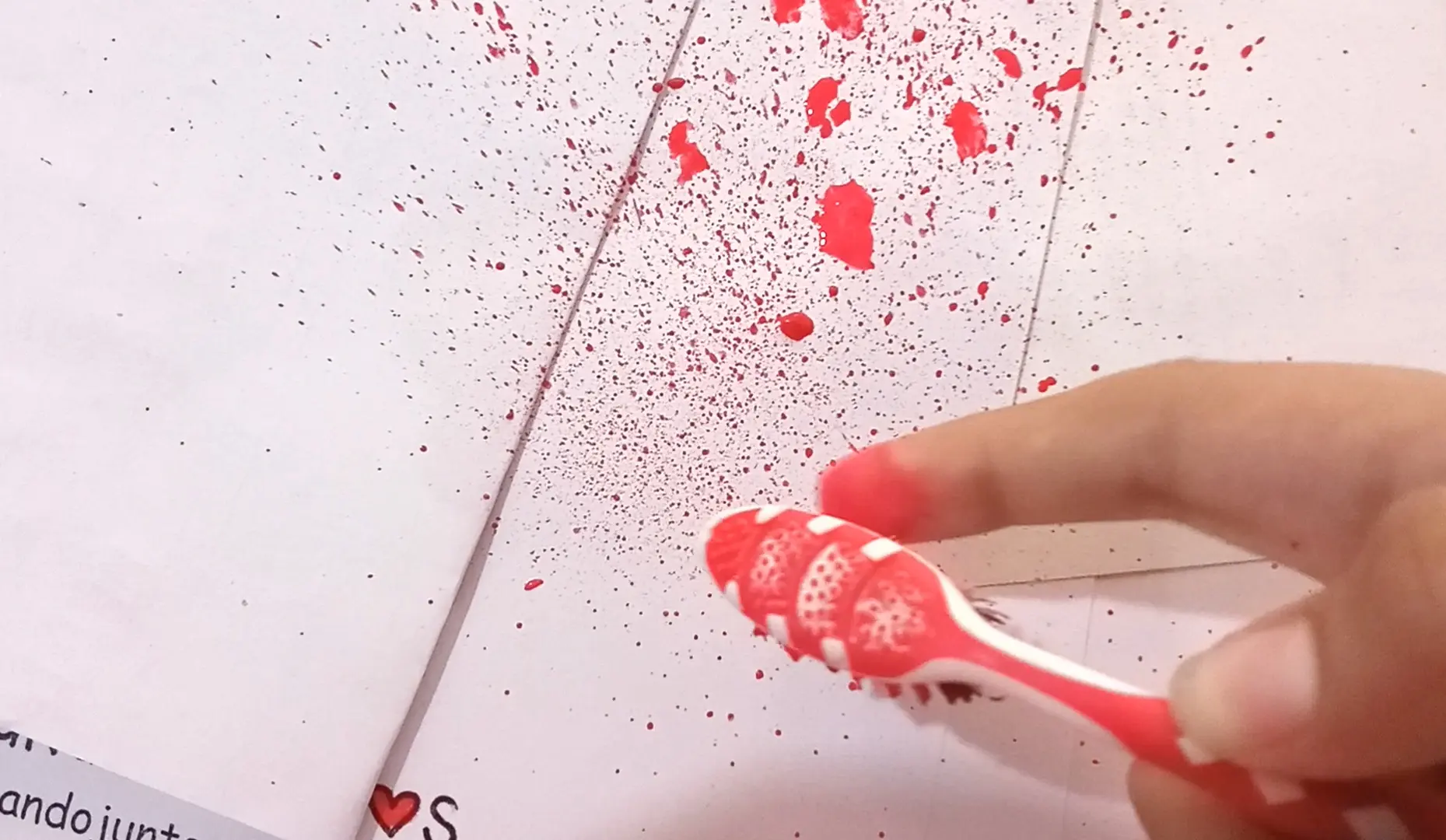
Here comes the most fun part! Spattering on the paper. As you do it, try not to move the sheets you used to protect your drawing, and start flicking paint splotches everywhere with your favorite colors.
Step 5: You can make other shapes and textures without spattering
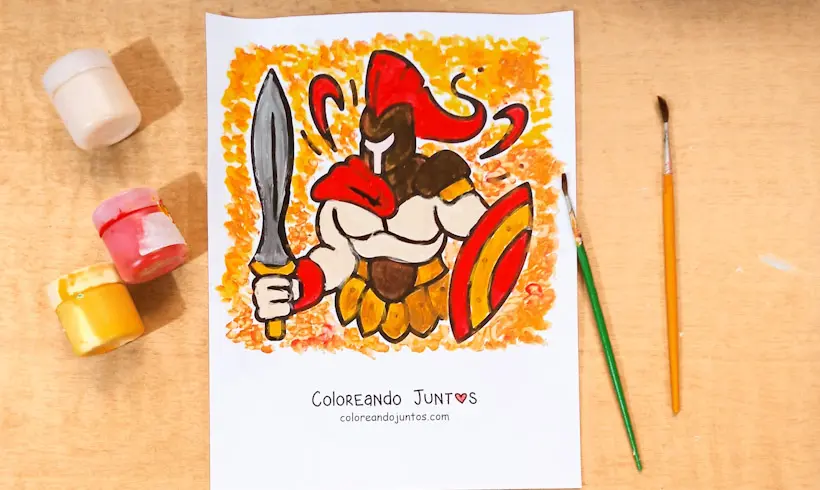
What if you try using the brush like a paintbrush? In this case, we decided to dab it on the paper so the shape of the bristles would be left behind And it looks great! Try it, with different shapes and strokes, we're sure the result will be amazing.
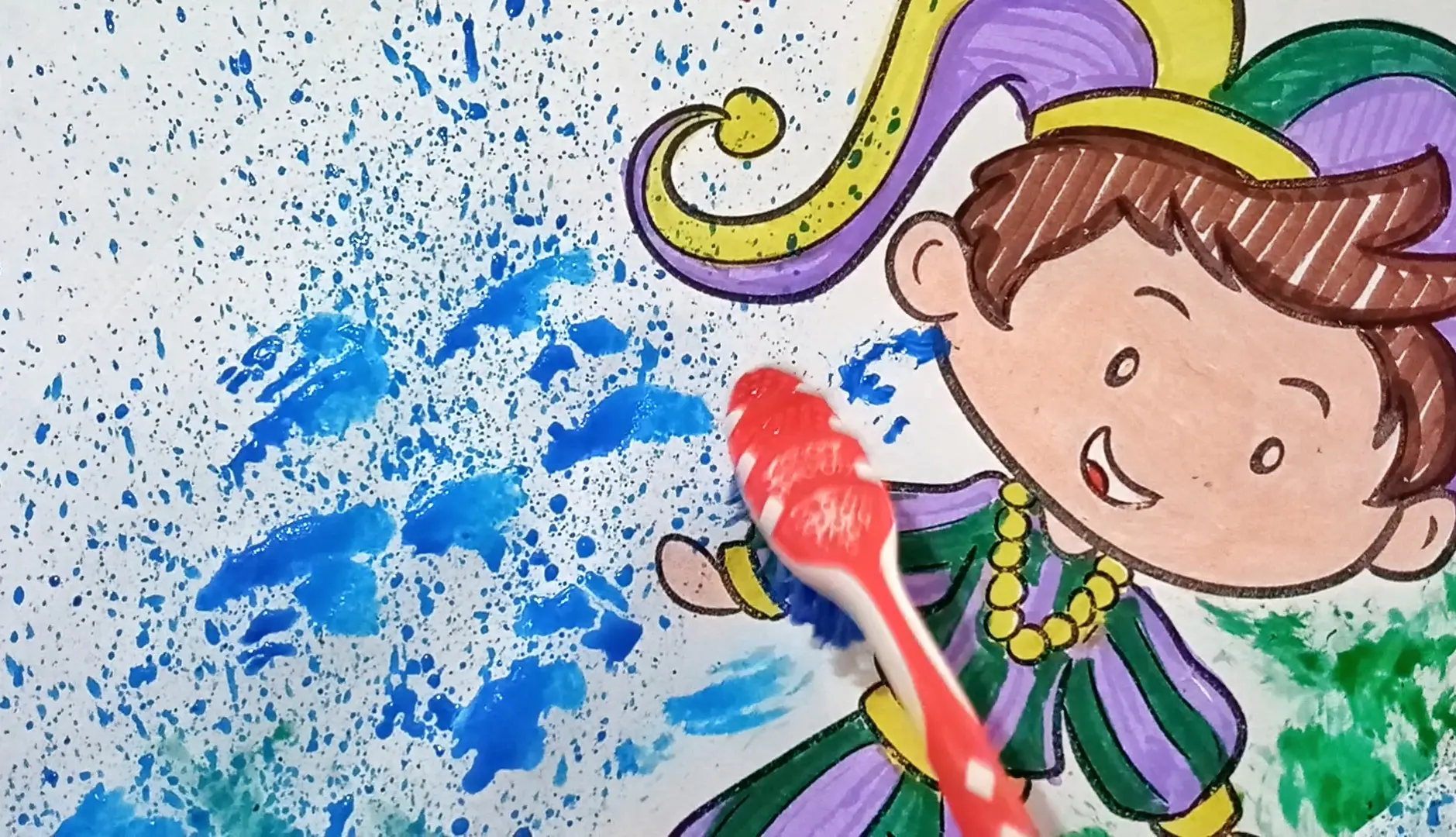
Examples of toothbrush painting applied
Techniques to apply with a toothbrush
Now we'll explain a few techniques you can use to paint with a toothbrush, which can serve as a complement to make amazing compositions. Grab your paints and read carefully.
- Blending: To blend, you just need to use different shades and spatter on the paper very close, this way you reduce the radius the spatter spreads across.
- Linear: Take advantage of the toothbrush's bristles and make linear strokes to get interesting textures.
- Pointillism: Maybe you won't get perfectly round dots, but try dabbing the paper with the toothbrush The results will surely surprise you!
Tips and tricks for coloring with a toothbrush
You're almost at the end, but there's still something very important you should know. The art team at Coloring Together got together to bring you some tips and tricks for coloring with a toothbrush. Don't miss them! We're sure they'll be very useful to you.
- If you don't plan to color your whole drawing with the brushing or spatter technique, then cover the areas you don't want to paint with sheets of paper. Cut them to your liking, and if you want, use a little tape so they don't move.
- If the paint is thick and doesn't spatter well, then dip the brush in a little water and then run your finger over the bristles, you'll notice the paint spatters much more easily.
- If you plan to change colors, clean the toothbrush and your finger before using the other one, since you could cause them to mix or stain each other.
- Protect your work area and your clothes. You can use an apron so you don't stain your clothes, and plastic bags on the table so you don't stain it with paint. Keep things clean!
- Spatter from different distances. The farther the brush is from the drawing, the wider the area it will spatter. If you spatter close to the drawing, then the spattered area will be smaller.
- If this is your first time applying this technique, then use a separate sheet of paper and practice on it until you know how it works.
For now, that's all we have to teach you. From here on out, it's up to you to put in a little effort to improve and start painting. Don't be afraid to reinvent and create wonderful works with a toothbrush!