Paint with cotton: Features and Tricks to Apply It

At Coloring Together we got tired of the simple, trivial, and boring techniques like using pencils and coloring. Today we want to do something different! Something that is a challenge, and at the same time a lot of fun. Can you think of anything? Because we sure can! This time let's learn to use cotton to color and paint.
Let's do it together! This is a very interesting way to color, since it will give your drawings unique and interesting textures. Don't you think it is a good chance to learn? That is why we will tell you how to color the coloring pages with different techniques using cotton.
What is cotton?
Cotton is a textile fiber, or a material that grows from the cotton plant. It can be used for many purposes, but our particular interest focuses on its uses in the art world. Being soft and barely porous, it can be used to create textures in drawings.
It is ideal for crafts, since its white color allows the creation of many elements, like clouds, sheep, ghosts, and many more things. Have you used cotton to paint something in particular?
Plus, cotton has absorbent properties, that is, it quickly absorbs moisture, which makes it a very interesting material to use with paints or watercolors.
What materials should you use cotton with?
There are certain materials you can use with cotton to get better results. For example, if you want to use cotton to glue it whole onto the surface you are using, then it is advisable to use a glue that suits the surface.
If it is cardboard, then hot glue is ideal so the cotton stays well stuck. However, if you use a sheet of paper or card stock, you could replace the hot glue with white glue or a glue stick.
On the other hand, if you want to paint with tempera, watercolors, or acrylic, you can use cotton to make textures or effects on certain surfaces. Usually, you achieve this by wetting the cotton and, with your hands, running it however you prefer over the surface.
You can use cotton for techniques with dry materials, for example, chalk. With cotton you can blur and get a much softer effect, unlike with your fingers.
You can do it with taps on your canvas, or you simply slide it. Keep in mind that you will get different results depending on the touch you choose. Try it out before starting! And you will notice which one suits you best for the effect you want to achieve.
How to paint with cotton?
The time has come for us to teach you everything we know about cotton for coloring. It is your moment to learn something new, with materials that maybe are not so common for painting. Do you want to give your drawings a different touch? Well, it is time for you to learn how to paint with cotton.
Step 1 (Optional): Paint the background and the details
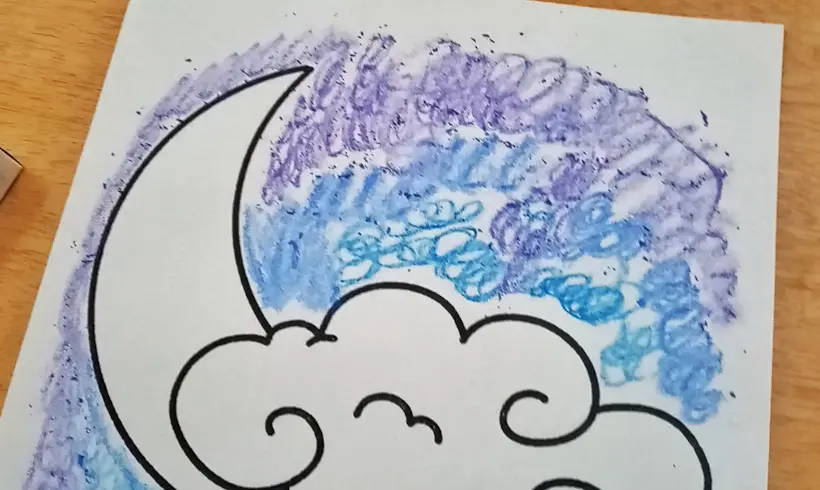
If you are going to glue the cotton onto the surface, then make sure to paint or color everything that will be behind it, so that gluing the cotton is the last step or link to finish your drawing. In this case, we first painted the background with pastel chalk.
The first layer was done with two colors, a blue and a purple to make shades and gradients.
Step 2: Blur with cotton
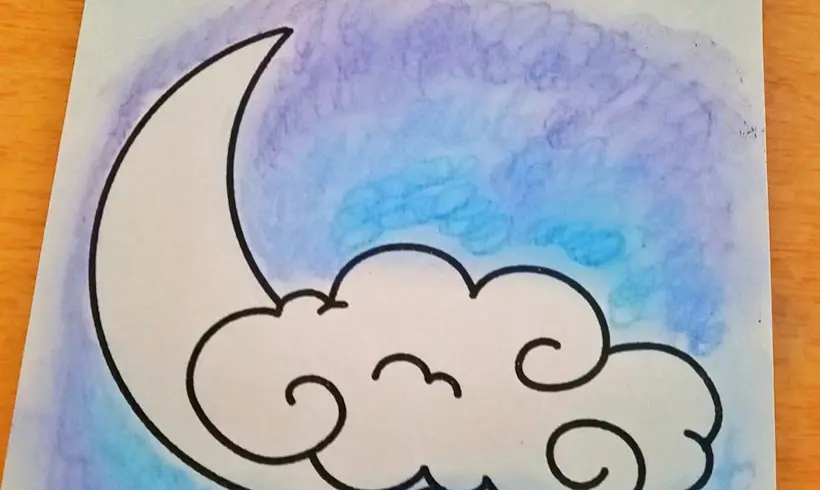
In this case we wanted to blur with cotton, not only to show you that it is possible to use it, but also so you could see that it leaves a much softer effect than if you had done it with your finger. Why? Because cotton is made of fibers and absorbs the excess material.
Step 3: Make as many layers as you need to get the desired tone
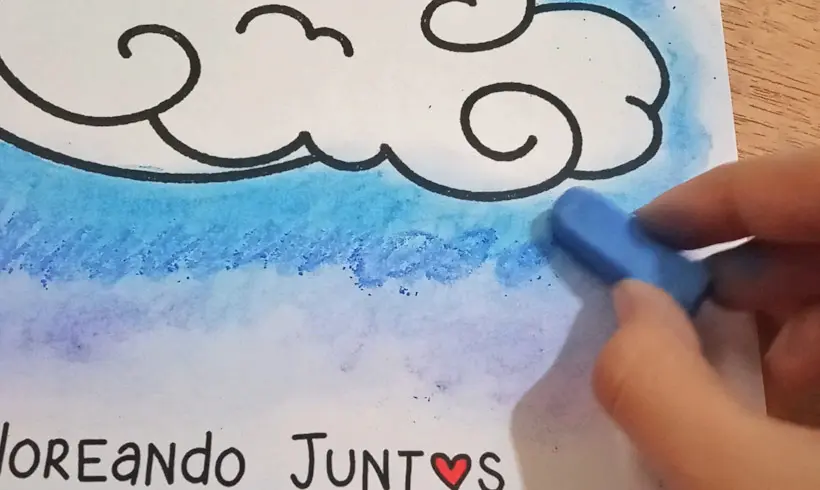
In this case, since the background turned out very light, we applied a second layer of color, so the tones had more intensity and the white color of the cotton stood out much more against the background. However, it is a step that will depend on the other materials you choose, and on the effect you want to achieve.
Step 4: Finish the remaining details
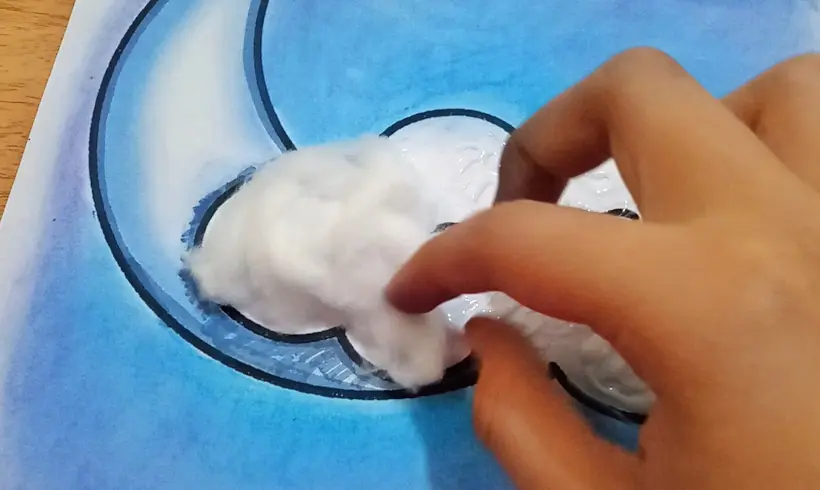
It is important to finish painting all the details you have left, like in this case where the moon was missing. For that we used colored markers to outline, and pastel chalk to color.
In this case we blurred with our fingers because the color intensity would be greater (since the finger does not absorb the pigment) and it would also give us greater precision when blurring. If you want to have the same precision, but you don't want to get your hands dirty, then you can use a cotton swab or Q-tip.
Then you can use white glue to stick cotton onto the clouds, sheep, snow or those elements you want to give that soft texture.
Examples of coloring with cotton applied
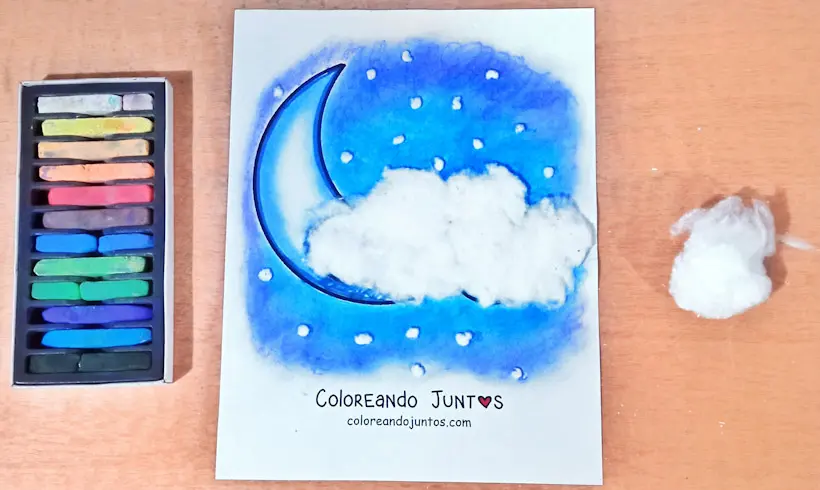



Techniques you can apply with cotton
Cotton is a material you can combine with other materials to make it stand out, or, instead, you can use it as a complement to create unique effects. Here we leave you some tools and techniques you can use together with cotton.
- Chalk: It doesn't matter if it is pastel chalk or blackboard chalk. With chalk you can create a unique background and blur it with cotton, or, instead, you can make it stand out by gluing it on top. Try it!
- Watercolors, tempera, or acrylics: There are several ways you can use the marker with paints. One of them is using it to generate textures on your canvas. For that, wet the cotton on the paint and start tapping where you are going to paint. Instead, you can glue the cotton onto your surface and then paint over it with a brush. You will get a very interesting texture.
- Gradient and toning: Regarding the techniques, with cotton it is easier to get very soft gradients and shades in your drawing, thanks to its spongy and fibrous surface, which spreads and blurs the materials better. With cotton your shades and gradients will be on another level.
- Pointillism: If you want to do pointillism with cotton, let nothing stop you! Although of course, it is a bit tricky because you have to make small balls with the cotton and then glue them one by one. But don't let that stop you from reinventing your art with this material!
Tips for coloring with cotton
Wait! We are not done yet. Before you go, we want to leave you some tricks and tips for coloring with cotton that you maybe didn't know. We want this list to be useful to you for when you are going to paint.
- If you are going to glue the cotton onto any surface, first color all the details. Why? Because if you glue the cotton first it can be tricky to color what will be around it, since you will have to rest your hand on the surface and it may end up over the cotton and dirty it.
- Blur with cotton all you want, however, keep in mind that it won't help you if you want saturated or very intense colors, because cotton absorbs the pigment or the color, so you will always get very light results, unless you apply several layers.
- To paint with cotton it is best to make little taps on the surface if you want to create textures, but if you only want to paint then slide it over the surface. However, you must keep in mind that cotton absorbs the paint, so you have to use plenty.
- Don't get the cotton dirty! Remember that it is a white material, so, if you plan to glue it, it is better to do it last for this reason. Imagine you are painting and you accidentally run the brush over your cloud. What a mess that would cause! That is why, for paints and dry materials, paint first and then glue onto the paper.
For now, that is all we wanted to teach you. It is not everything there is to know about cotton in art, however, it is what our artists know. The rest is in your hands, since from now on it is up to you to paint and learn in the process. Excited? Then let's begin!