Color Realistic Skin with Colored Pencils: Features and Tips to Apply It

Do you want to know how to color brown skin? Or maybe you are looking for how to color white skin? At Coloring Together we want to teach you how to color any type of skin with your wooden pencils in a realistic way.
But coloring realistic skin must be really complicated! Well, if that is what you think, then let us prove you wrong. In reality, it is simple, it just takes a lot of practice and patience. Do you want to learn?
Excellent! In this section we will teach you how to color realistic skin so that your coloring pages look fantastic. What do you say? Are you up for it? Then grab your colored pencils! It is time to learn.
What is realism?
Realism in art is a movement that originated in France in the mid-19th century and that is characterized by representing reality in an objective and faithful way, without idealizing or embellishing it.
Realist artists draw inspiration from everyday, social and political subjects, and they portray common people, especially workers and peasants, as a way of denouncing injustice and social misery.
Realism in art is opposed to romanticism, which was the dominant movement in the previous era and which was based on the exaltation of emotions, imagination and legendary or fantastical subjects.
Realism seeks to show things as they are, without resorting to supernatural or divine intervention, and following empirical and secular rules. In other words, there are no fanciful elements or elements outside reality in this artistic movement.
Representative artists of realism
Some of the most important figures of realism in art were:
- Gustave Courbet, considered the father of realism. He was known for his rejection of idealized subjects and his attention to everyday life. His most famous works include "The Painter's Studio" (1855) and "The Origin of the World" (1866).
- Jean-Francois Millet. He devoted himself to representing the life of French peasants. His best known works include "The Angelus" (1857) and "The Gleaners" (1857).
- Honore Daumier was another realist artist, who used his works to criticize the French society of his time. His most famous works include "The Third Class Carriage" (1848) and "The Origin of the Law" (1849).
- Edouard Manet, a painter who stood between realism and impressionism
- Camille Pissarro, who also experimented with realism. His most famous works include "The Luncheon of the Boating Party" (1868) and "View of Louveciennes" (1870) respectively.
What characterizes the style of realism in drawing?
The main characteristics of the realism technique in drawing are:
- Fidelity to reality: The realist artist sets out to represent reality as it is, without filters or distortions. To do so, they use techniques that allow them to capture the physical appearance of objects and people in a precise way.
- Contemporaneity: Realist art focuses on the subjects and concerns of the contemporary world. Realist artists tend to depict the everyday life of people, with their problems and their joys.
- Social denunciation: Realist art is often used as a tool for social denunciation. Realist artists tend to address subjects such as poverty, injustice and inequality.
- Detailed observation: The realist artist must observe carefully the object or person they are going to draw. This will allow them to capture forms, textures, shadows and lights in a precise way.
- Precise drawing: Realism uses drawing techniques that allow it to represent the proportions, lines and contours of objects and people with precision.
- Patient work: Realistic drawing requires patient and dedicated work. The artist must take their time to capture every detail of the object or person they are drawing.
What techniques are important for coloring realistic skin?
The important techniques for coloring realistic skin are the following:
- Observation: The artist must observe carefully the skin of the person they are going to draw. This will allow them to capture the color nuances, the textures and the shadows.
- Shading: Shading is an essential technique for creating the illusion of depth and volume in the skin. The artist must use a range of color tones to create shadows and lights.
- Layers: To color anything in a realistic way, you have to make a certain number of layers to shade and blend the colors properly.
- Blending: Blending is a technique that allows you to create smooth transitions between colors. The artist can use a brush, wooden pencils or their fingers to blend the colors. It all depends on the material.
- Strokes: Strokes can help create a realistic and natural look in the skin. The artist must use small and soft strokes to create a smooth skin effect.
How to color realistic skin?
It is time to color realistically! Do not chicken out now, we assure you that coloring realistic skin is not as hard as it seems, you just have to be very patient. Come, at Coloring Together you will learn how to color realistic skin with wooden pencils alone.
Step 1: Apply a base color layer (intermediate color)
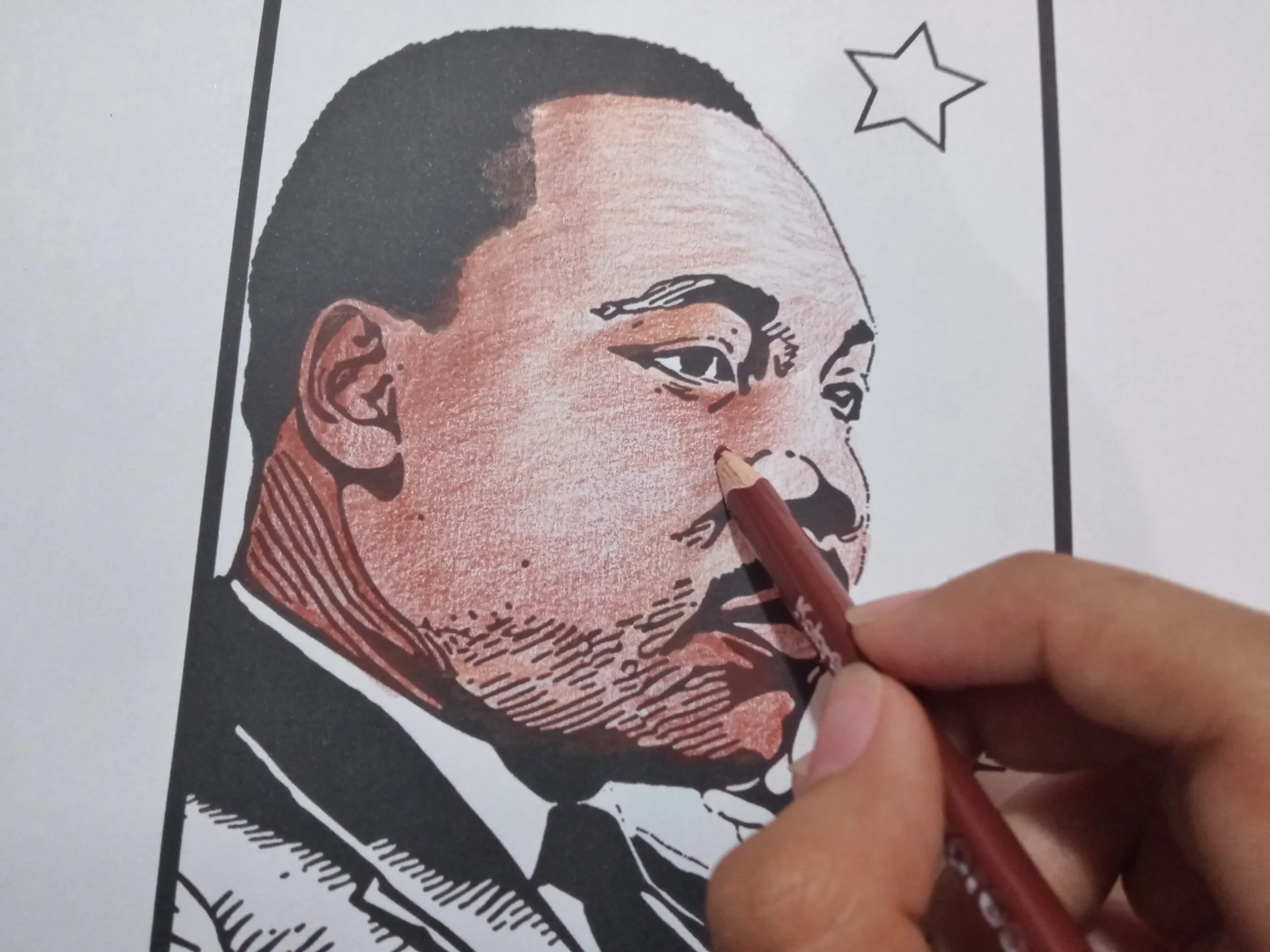
To color realistic skin you need to choose at least three color tones. A light color, an intermediate color (a little darker than the base) and a dark color. The last two are used to make shadows and the first one is used to blend.
Start by applying a base color layer with the intermediate color. Do not forget to color in the same direction across all the skin.
Step 2: Add a layer of dark color. Start shading
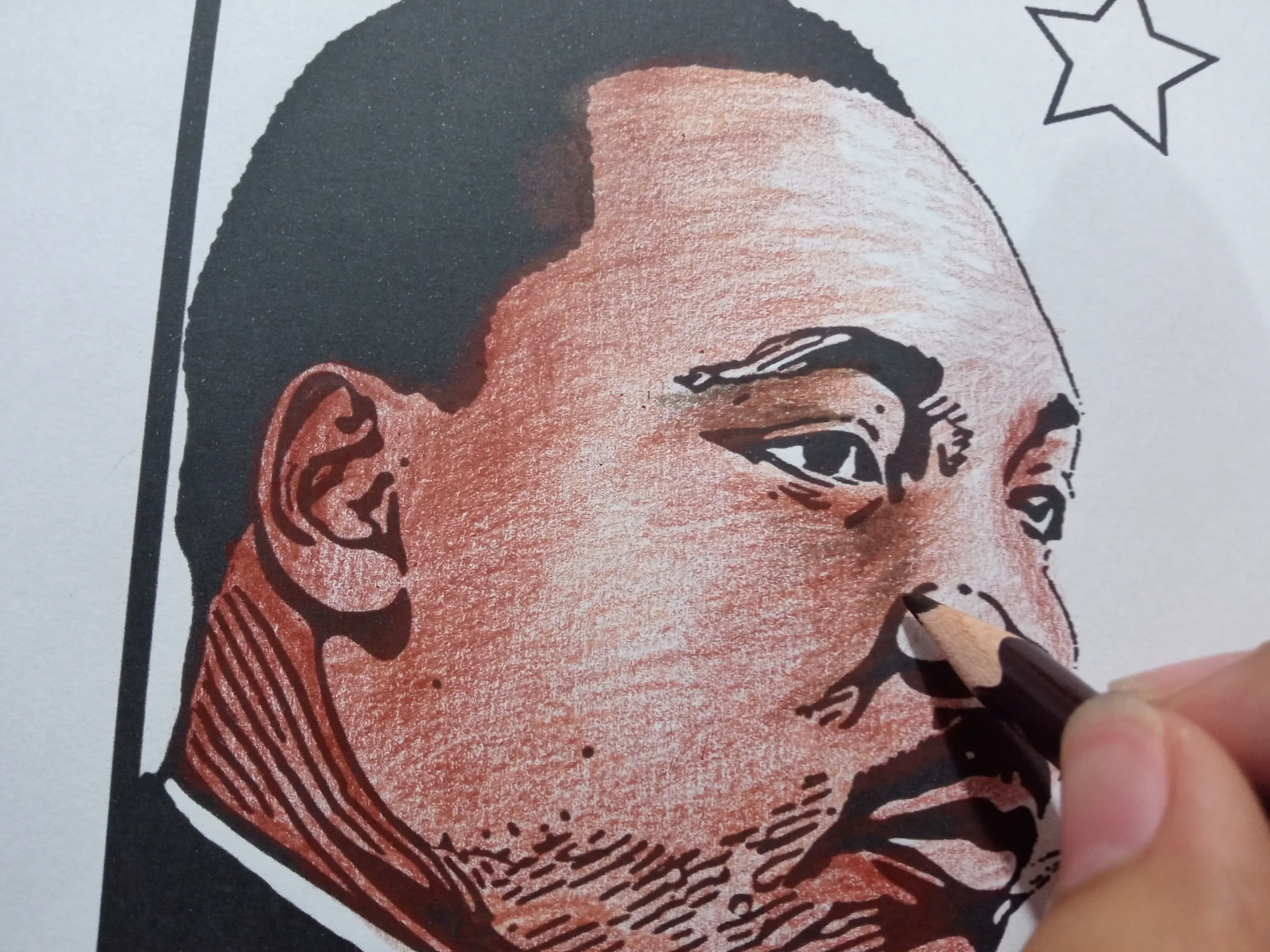
Once you have the first layer ready, start shading with the darkest color. For this step you should already be clear about where the light comes from, and therefore, where the shadow will be.
Apply as many layers as needed so that your shading looks as realistic as possible. Remember that the realistic technique requires patience and concentration.
When you finish applying your shadow layer, color over it with the intermediate tone color. This way both colors will start to blend and at the same time you will reduce the white spaces caused by the porosity of the paper.
Step 3: Blend the intermediate color and the dark color with the lightest color.
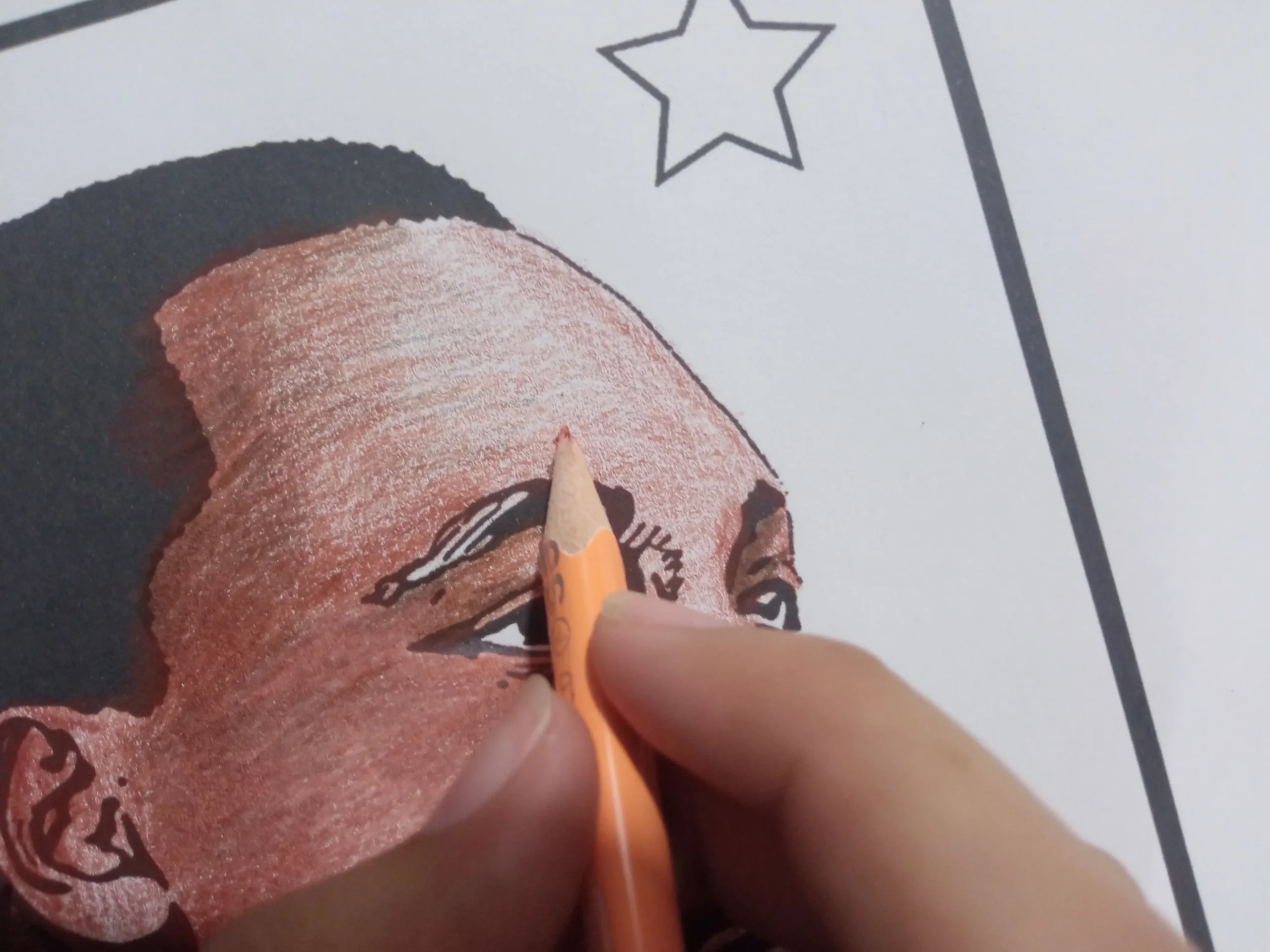
Keep applying shadows with the dark color and the intermediate one as much as necessary. When you finish, use the lightest color to finish blending the colors, and to make the areas of light or the lighter parts of the drawing. You will see how good it looks!
Step 4: Use an eraser to create highlights
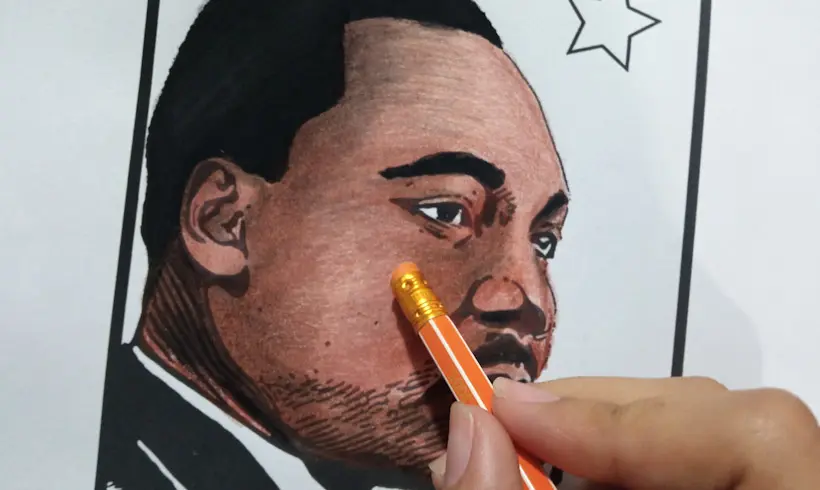
With a small eraser, gently erase a little in the areas most exposed to light or where the highlights should go. This way, you will create a good contrast, which will highlight the lights and shadows of your drawing. You can use the eraser that comes with your graphite pencil, but be careful not to tear the paper or remove more pigment than you wanted.
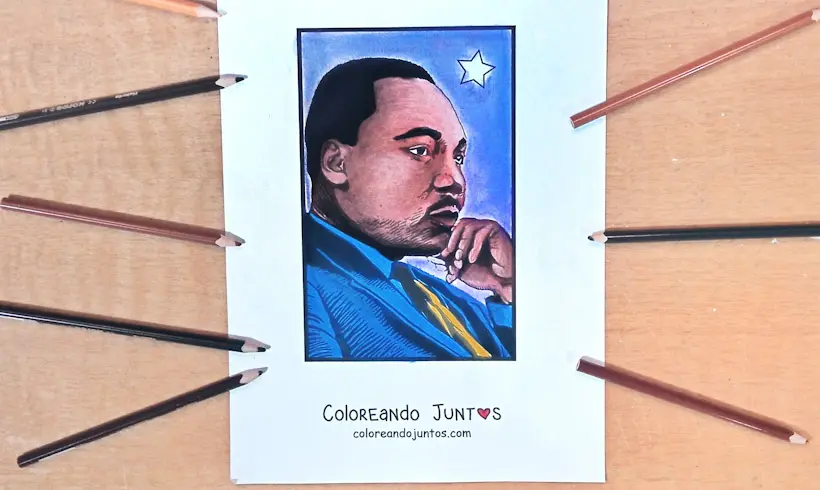
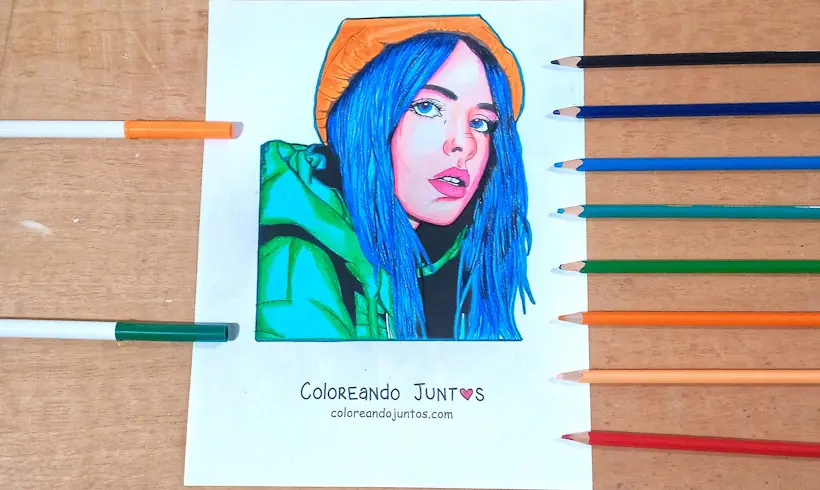
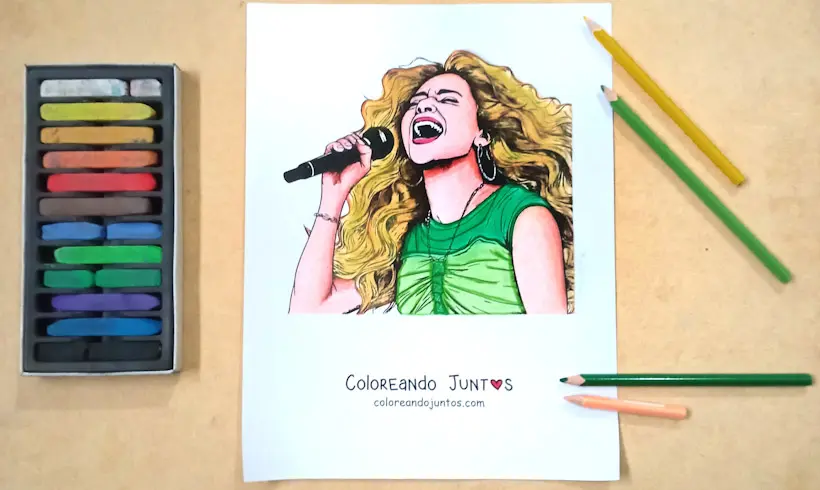
Examples of realistic colored skin

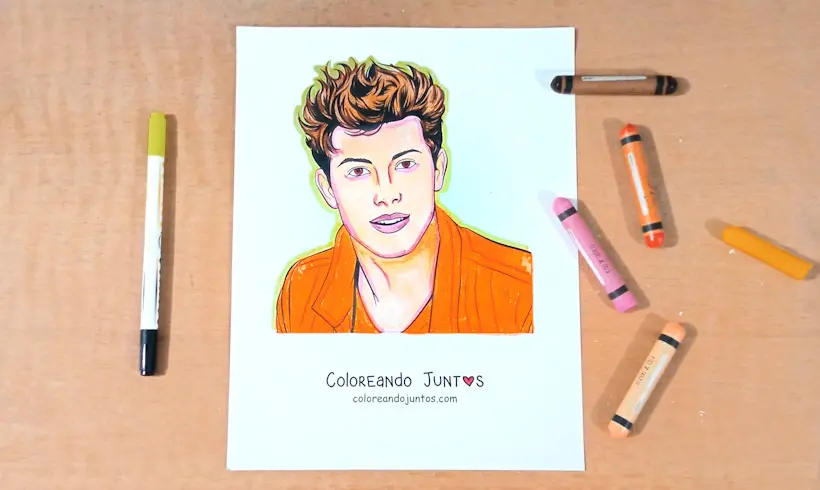

Techniques for coloring realistic skin
If you have made it this far it is because you want to know what other techniques can be applied while you color skin in realistic style. Let's go! I will tell you which are the most important ones:
- Shading: If you want to get a realistic result, shading is essential.
- Whitening: To blend the colors, you need to apply the whitening technique, either with the white color or with the lightest color. It depends on the case or on what you are coloring.
- Layered coloring: coloring realism is a technique that requires many layers, as many as are necessary to get the level of realism you want.
Tips and advice for coloring realistic skin
You have already come quite far, are you ready to start coloring realistic skin? If you still do not feel confident, then do not worry. We will leave you some tips and advice for coloring realistic skin so that your drawings from now on turn out amazing. Ready to learn?
- Start with a base layer of intermediate color, and after that apply a layer of light color. This base layer will help you establish the general tone of the skin.
- Apply shadows and lights with darker and lighter tones. Remember, shadows should be applied in the areas that are farther from the light and lights should be applied in the areas that are closer to the light.
- Use a color palette with a wide range of tones, after all, people do not have a uniform skin color, so observe your reference very well and try to imitate it. This will allow you to create smooth transitions and natural nuances.
- Experiment with different coloring techniques. There is no single correct way to color realistic skin. Try different techniques to find the one that best suits your style.
- Observe the skin of real people. Pay attention to the color nuances, the textures and the shadows. This will help you create more realistic drawings.
- Do not blur everything. Even though it may not seem like it, people's skin is not smooth, so try to make more hatching than blurring. In very specific cases and places you can blur, but not everywhere, keep that in mind!
For now, that is all we have to teach you. The most important thing about these tips is that you practice and practice. Practice makes perfect, and you will not get results from one day to the next. Be patient and have plenty of confidence that you will surely make it. Let's color!