30 Butterfly Coloring Pages - Free!
Insects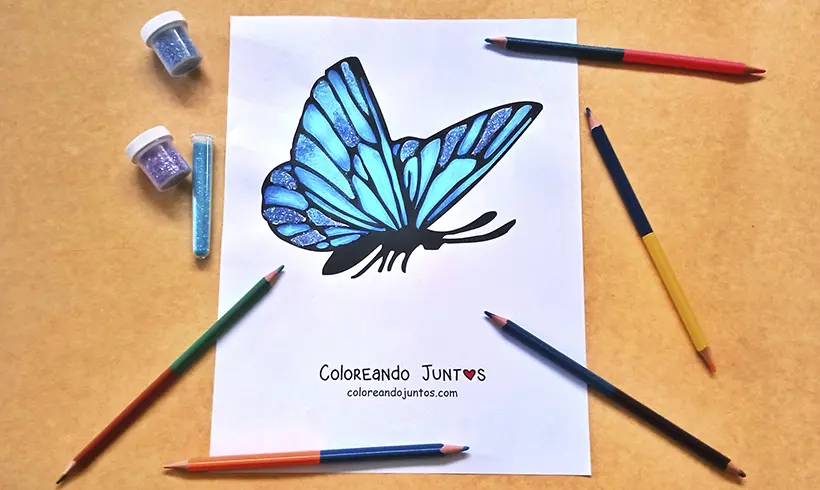
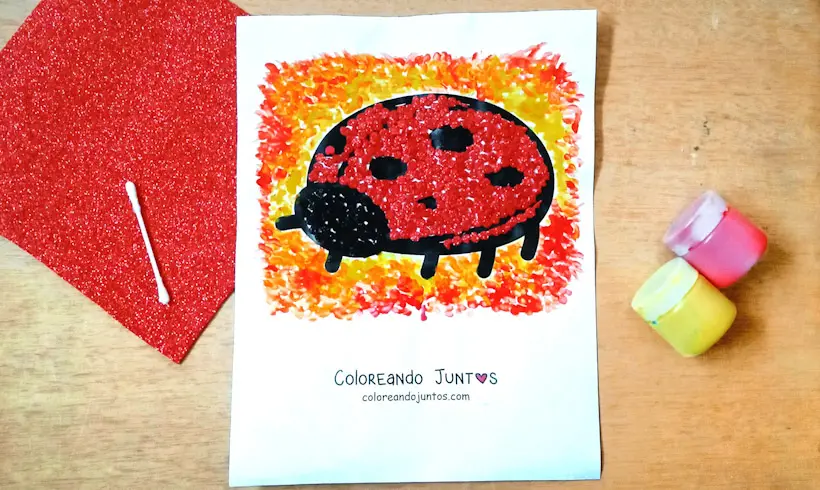
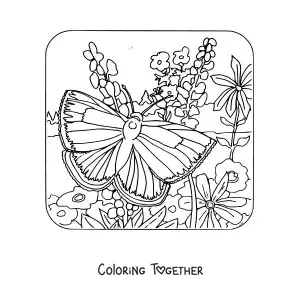
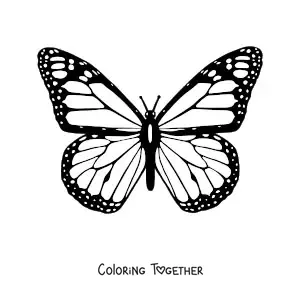
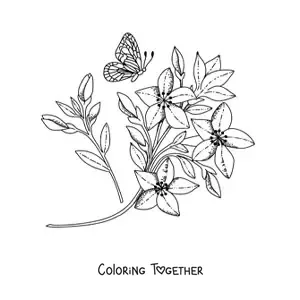
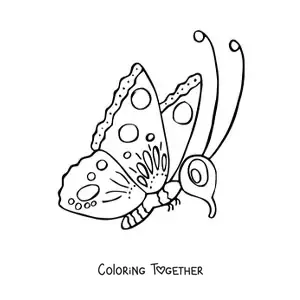
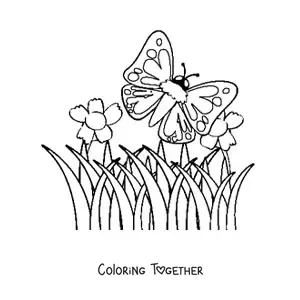
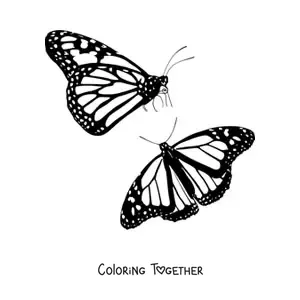
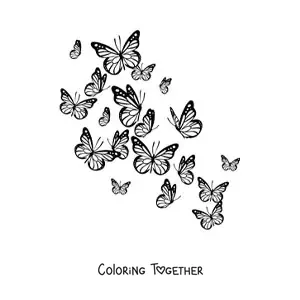
We colored this cute butterfly drawing so you can see how nicely they turn out when painted. Would you dare to make one like this or similar? We would love for you to do it. Make it however you like!
They are one of the most varied insects in shape and color out there. You can find yellow or blue butterflies. Here we bring you butterfly coloring pages to print and color so you can have tons of fun.
There are no limits! You can use whatever shades you like. In fact, there are about 24,000 known species of butterflies all over the world. That's so many! So don't worry, there are ones in every color.
They are one of the most beautiful insects, and even though they are small, some species like the Blue Morpho can be a bit bigger than usual. Each one has very interesting features. Want to know what they are?
We would love to tell you more. So at Coloring Together, we bring you butterfly coloring pages, with interesting facts about them that you didn't know.
Let's learn! We know you will be amazed. You don't have to worry about supplies, there are many ways to color a drawing. With whatever you have at home, you'll get beautiful results.
Send us your art! We would love to share it with everyone, so we will gladly display your drawings in the gallery.
So, did you pick your butterfly yet? Excellent, we'll take a stroll through beautiful gardens so you can give color to these magnificent insects.
Are you ready? Then let your imagination flow as you color!
Butterflies coloring pages
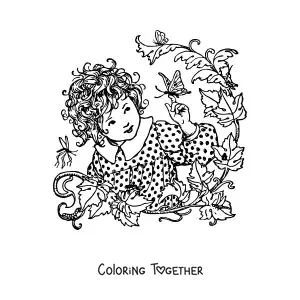
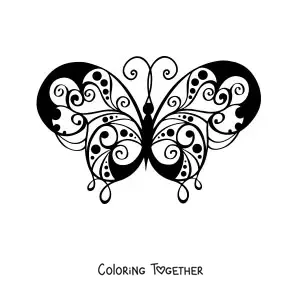
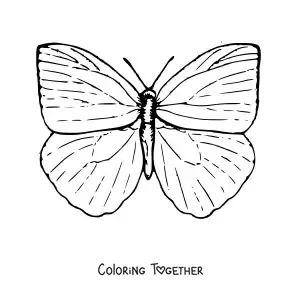
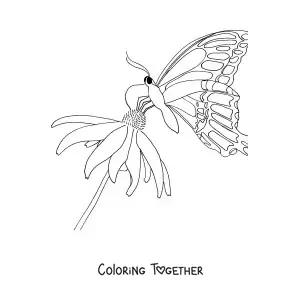
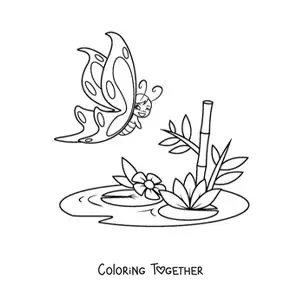
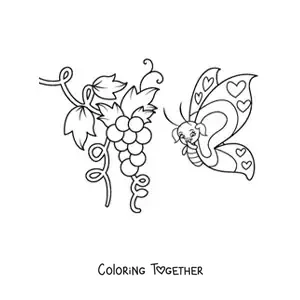
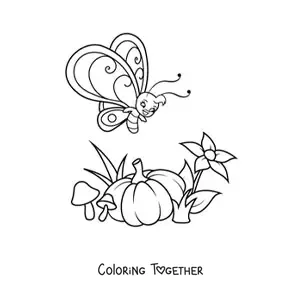
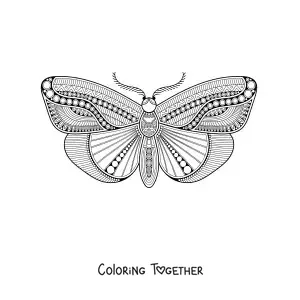
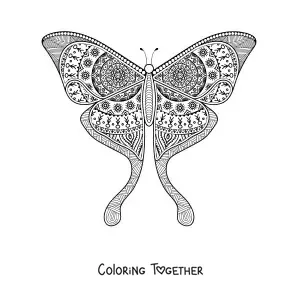
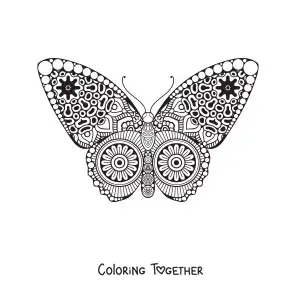
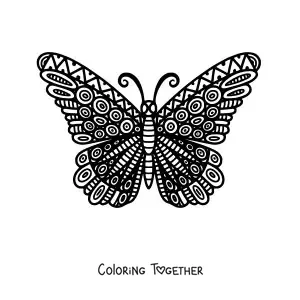
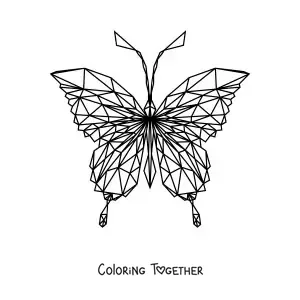
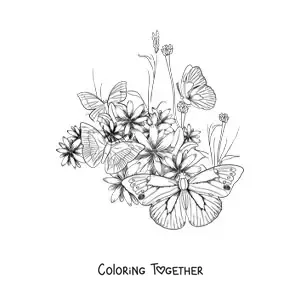
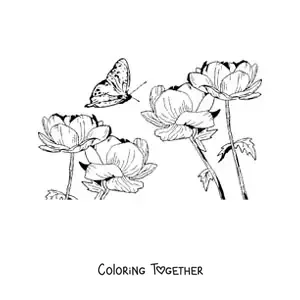
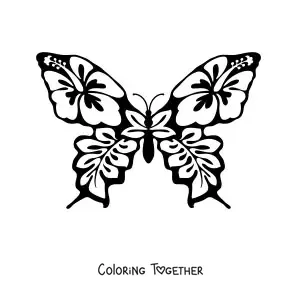
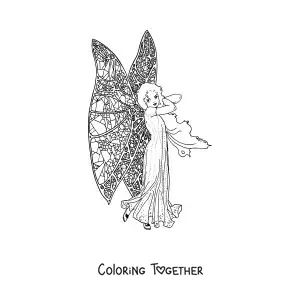
Why color pictures of butterflies?
You would be surprised if you knew the great variety of butterfly species out there. They are so beautiful and delicate that it's impossible not to be charmed by them. Have you ever wondered how much you know about them?
Butterflies are studied by the branch of biology known as entomology, did you know? Which also studies other insects just as interesting as them.
They are very different from bees or wasps. They have large wings with very striking colors. There are two kinds: daytime ones and nighttime ones.
Have they told you about moths? They are also butterflies! Just nighttime ones, so their colors are darker, to go unnoticed by predators.
If you decide to color butterflies, you'll be able to learn a lot about them, even more than what we've already told you. On each butterfly coloring page, we add fun facts that help you learn more about them.
Would you give it a try? We're sure you won't regret it. So, hurry! Pick your favorite butterfly and give your creativity free rein.
Learn while coloring Butterflies
- Butterflies have the scientific name “lepidoptera”
- Butterflies are insects, so they have six legs and a body divided into three parts: head, thorax, and abdomen.
- Butterflies have a tube-shaped mouth that they use to suck nutrients from plants.
- Butterfly wings are actually transparent. Did you know? The colors we see come from the scales that reflect light.
- Butterflies can fly from 8 to 20 km per hour. They are fast!
- There is one place in the world where butterflies aren't found. Do you know which one? Antarctica.
- Butterflies like the sun. In fact, they thrive in areas with very warm temperatures.
- Butterflies have their smell receptors on their legs, so that's how they figure out whether a plant is edible or not.
- There is a branch of biology in charge of studying butterflies and other insects; it's called “entomology”.
- Only one tenth of butterflies are daytime ones, the rest of them are nighttime ones.
- The smallest butterfly in the world is the Brephidium exilis, which can measure a total of 1.2 cm. It's tiny!
- When butterflies are adults, they feed on the nectar of flowers.
- Butterflies are excellent pollinators, meaning they transfer pollen from one flower to another, ensuring their reproduction.
- Butterfly larvae are what we know as caterpillars, and they play the role of providing food to various living beings.
- It is said that the Spanish name “mariposa” comes from the joining of “María” the virgin, and “posar” (to perch).
- The ancient Greeks considered butterflies a symbol of feminine divinity. Years later it became the emblem of the soul.
- Butterflies, in Mayan culture, were considered the souls of warriors who died in battles. Amazing!
- Australian aboriginal people considered butterflies to be the souls of the dead. Do you think they could be that?
- “Moths” are actually nighttime butterflies. Did you know? And they are not dangerous.
- Butterflies are migratory animals, meaning they travel many kilometers to find a climate suitable for reproducing.
- Some butterflies have spots shaped like “eyes” on their wings that help scare off predators.
- When they are larvae, butterflies feed on organic matter, that is, leaves, roots, stems, and more.
- Moths are attracted to the light of light bulbs because they mistake it for the light of the Moon, which they use to orient themselves.
- The largest known butterfly is called “Ornithoptera Alexandrae” and can measure up to 31 cm.
- Butterflies can see objects moving at high speed, and can also perceive colors that we can't. Incredible!
- A butterfly can have around 500 eggs, although this number will depend on the species.
- The predators of butterflies are: wasps, toads, rats, snakes, birds, monkeys, and many more. Poor things!
- There is a butterfly that feeds on the blood of other living beings, and it is known as the “vampire butterfly”.
- To attract the attention of other butterflies during the mating stage, they release a kind of powder that attracts their mate.
- Butterflies breathe through openings called spiracles, very different from lungs.