Color with Pens: Features and Tricks for Applying It

Don't have any colors? Want to make a colorful composition, but you're short on materials? Don't worry! At home we all have a few pens we can make the most of. Come to Coloring Together! We'll gladly explain how to color with pens.
You don't need to be a total expert to handle these materials. Remember: practice is the best teacher. So, if you want to master pens, then come and let's learn by coloring!
What are pens?
The pens or biros, are instruments we commonly use to write. They have a tip that contains a steel ball, and when it comes into contact with a surface, like the sheet of paper, it rolls and makes the ink come out of the ball.
It is the most popular writing instrument, because if you want to preserve work or make permanent marks, then it's ideal, since it can't be erased easily. And you, do you use your pens very often?
One of the advantages that pens offer is that they are a universal instrument produced on a large scale, therefore the prices of this product are very low Anyone can get a pen!
History of pens
There is some controversy about who invented the pen. Some say it was invented by John J. Loud, in 1888, who would make the first design of what we know as the pen, with a tube of ink to be able to mark lines on tanned hides.
The definitive version of the pen was made by the Hungarian, naturalized in Argentina, Ladislao Biro, and his brother George, who was a chemist. They wanted to get rid of the uncomfortable fountain pens, so they made an ink that was very useful for writing.
Ladislao Biro patented a prototype in Hungary, in 1938. But it wasn't until 1943 that his invention was licensed, for a sum of 2,000,000 dollars, to the company Eversharp.
Are pens good for coloring?
Without a doubt, using pens to draw or paint is tricky, because it is an instrument that doesn't allow for corrections, like pencils or colored pencils do. A pen can't be erased, or at least it's very hard to do so without damaging the sheet or surface. Also, its thin tip requires us to have good control of our strokes.
However, it's not impossible to learn to master it. To color with pens you must keep in mind that the best way to color with them is by forming patterns, with various densities, and making use of fine and thick strokes, depending on the effect you want to achieve.
With pens, you can make shadows, contrasts, and transparency effects. Also, it's not a material you have to use alone, quite the opposite, you can combine it with other materials to get better textures.
How to color with pens?
You already know almost everything you need to know about pens, the most important thing is left: the step-by-step of how to apply this technique. Are you ready to begin?
We'll gladly teach you how to apply the colored pen technique. techniques. Keep them handy, because you'll leave here eager to give it a try.
And before you go, don't forget to check out our tutorial on how to color with pens.
Don't miss it!
Step 1: Apply a base color layer
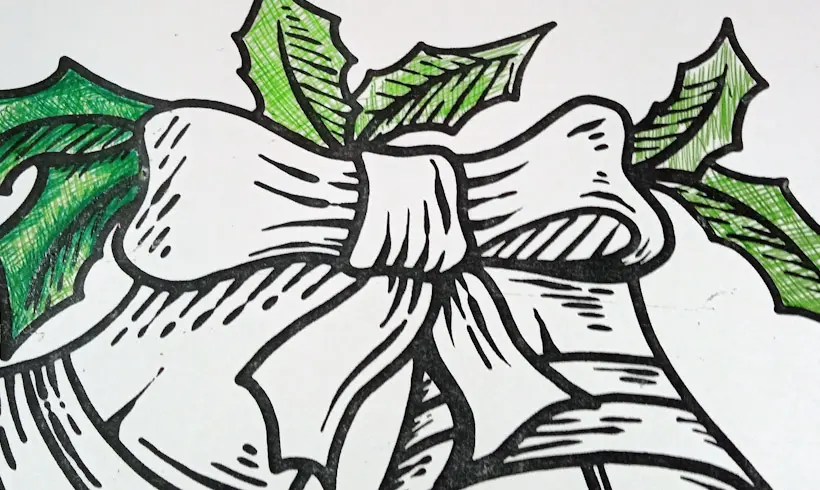
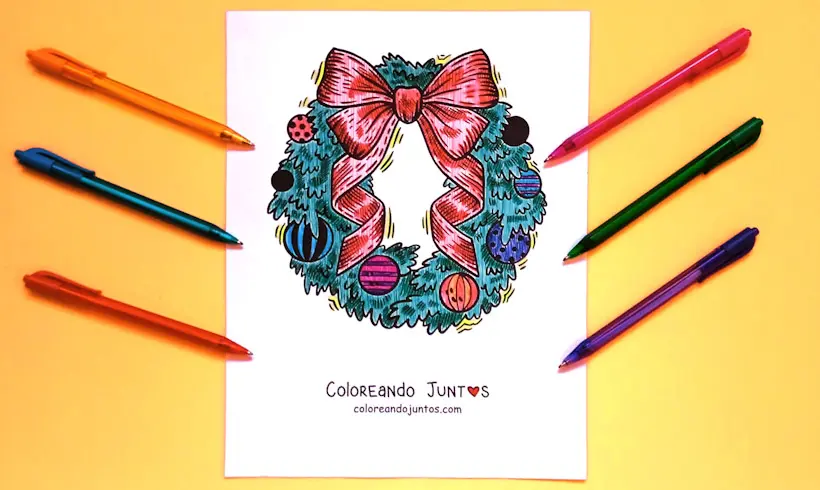
To start coloring with pens, the best way is to color by making lines in one direction until you partially fill in the drawing. This will be what we'll know as the base layer. In this case, it's the green color with the leaf.
Step 2: Apply a second and third color layer if necessary
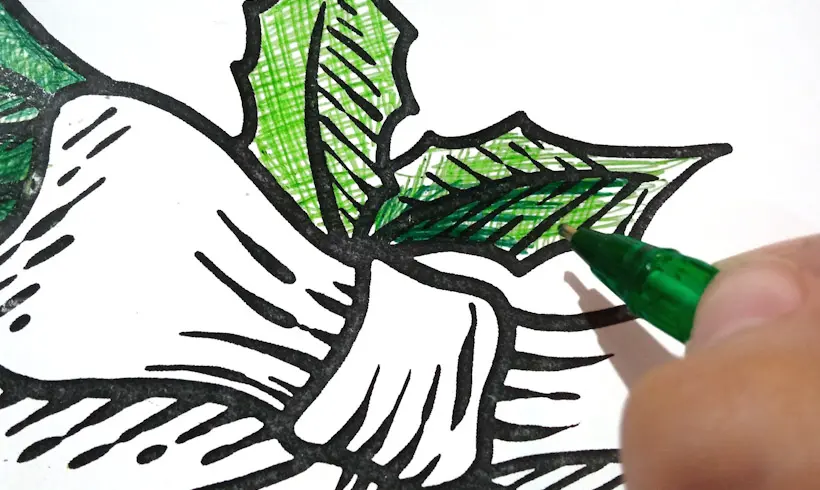
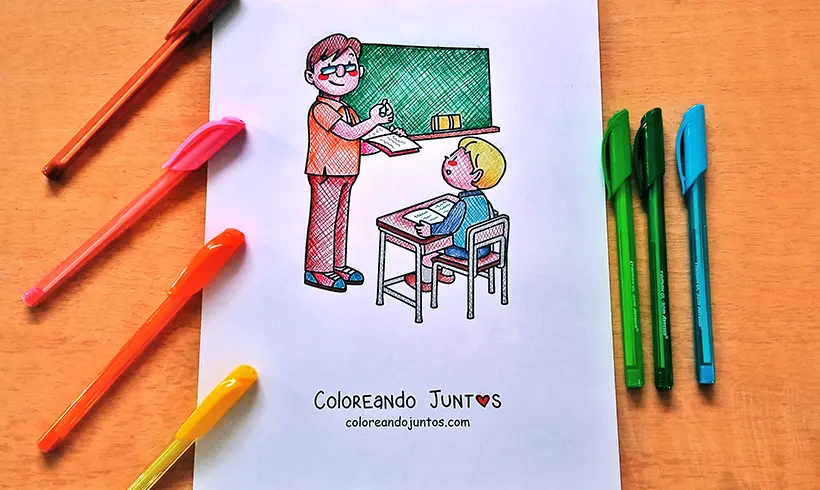
Patterns are necessary if you want to color with pens. That's why the second color layer should be one that goes in the opposite direction from the first lines, so that it gives the cross-hatching effect. You'll notice how the color intensifies. It will definitely look much better!
Step 3: Use a second, darker color to make shadows and highlight light areas
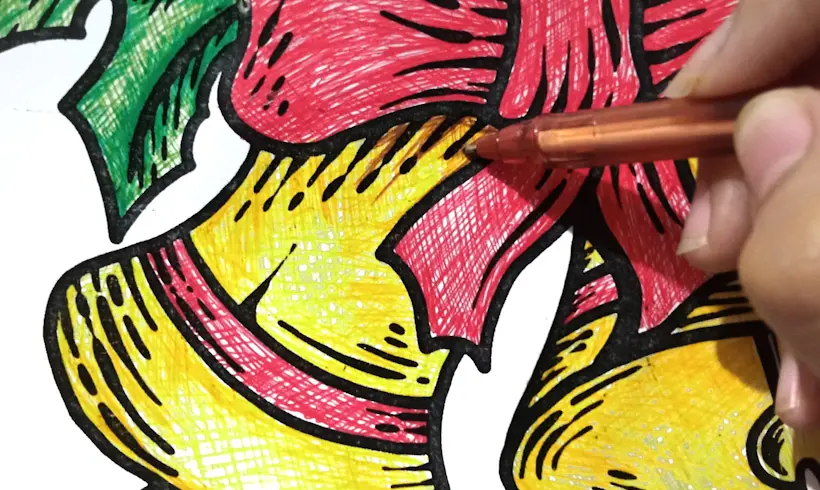
Once you have the base colors, use a darker tone to make shadows and highlight details. In the case of the leaves, I used a dark green to make areas of depth. In the case of the bow, since I didn't have a dark red, I used brown. Avoid black! Always look for a similar color to get a better finish.
Step 4: Combine colors to create various shades
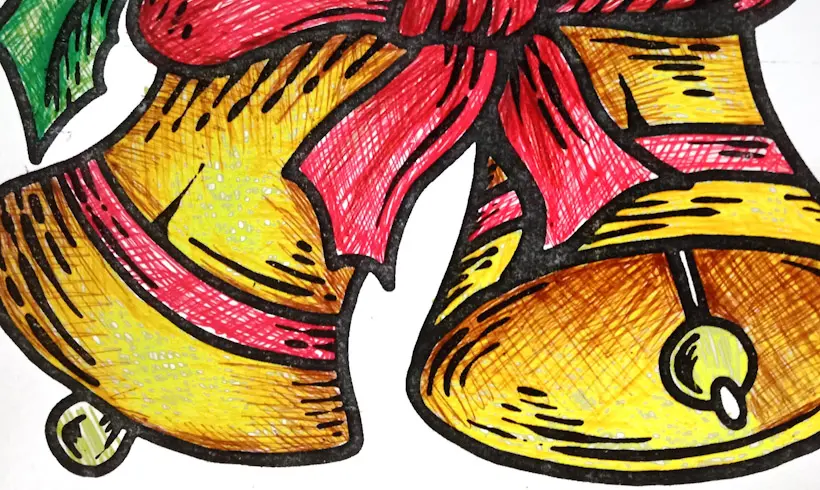
Try to always color with the patterns, and dare to combine colors to get incredible results. For example, on the bells, I used a yellow as the base color, another dark yellow to mark the shadow areas, and over that layer, I applied a bit of brown to form the golden tone. Do you like how it looks?
Step 5: Add details. The options are infinite!
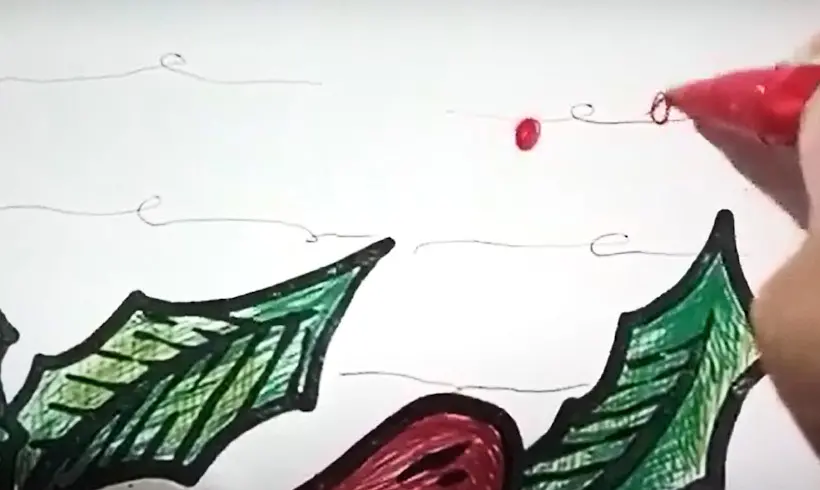
Don't be afraid to make patterns or to apply other techniques with pens. Combining them with other materials and making shapes and patterns will give your drawings a unique touch. Give it a try! And you'll notice how great your compositions will turn out.
Examples of coloring with pens applied
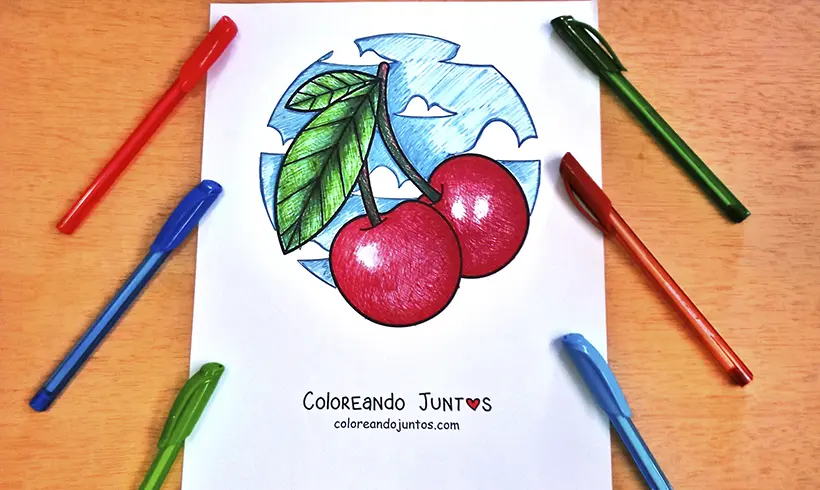
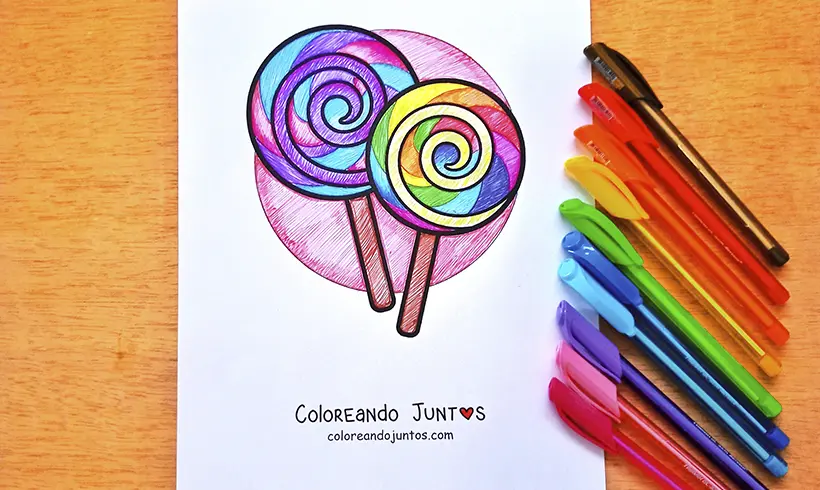
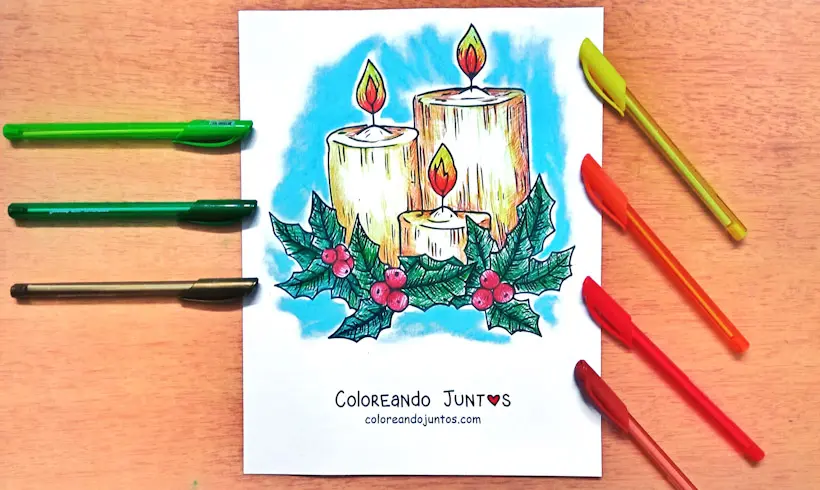
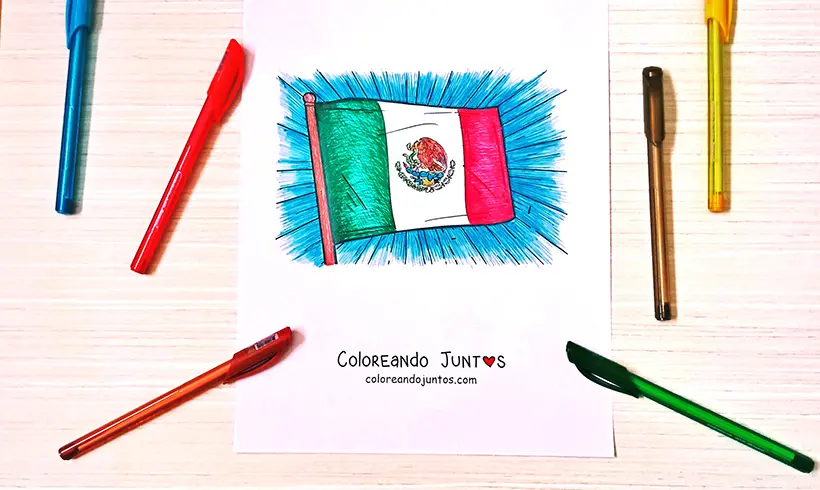
Techniques you can combine with pens
It's true that pens are complex materials to use. They require skill and dexterity in your strokes, and a combination of techniques and materials so the composition turns out well. Don't worry! In this section we'll explain some techniques you can use with pens.
The key to mastering each of them is putting in effort and a lot of dedication. Yes you can! With these techniques you'll learn much more about pens and everything you can do with them.
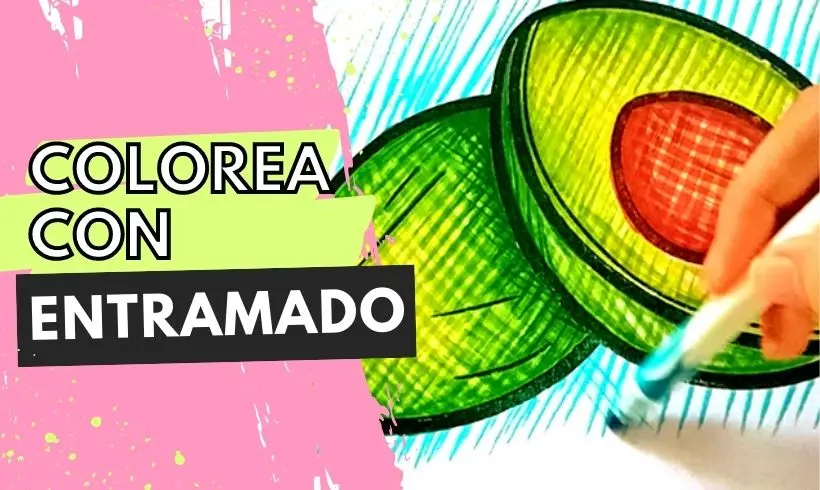
- Cross-hatching: if you want to color with pens, making patterns is a fundamental technique. For that, make lines in one direction and then in the opposite one, until you cross them and get the shades and effects you want.
- Burnishing: If we told you it's possible to get a smooth texture with pens, would you believe us? It's possible! You just have to make layer after layer with the pens, and blend until you get the texture you want.
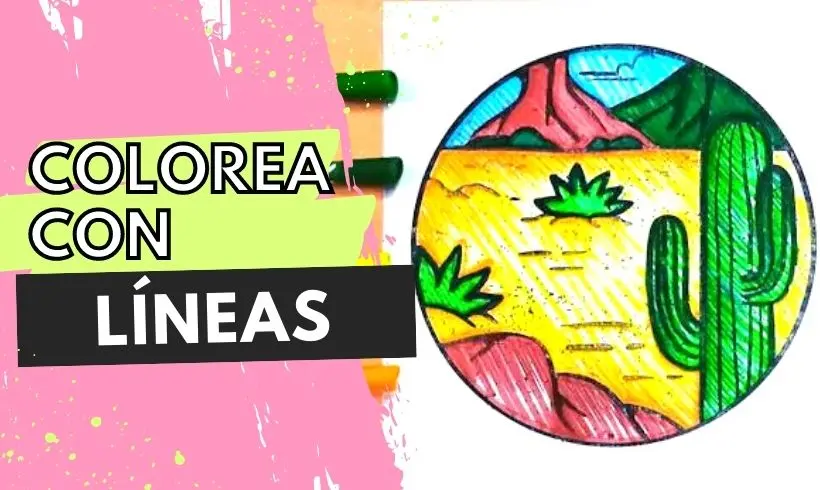
- Linear: If you're an artist who likes to experiment, you can apply the linear technique with pens. You just have to color in the same direction with the lines, until you get the shades you want.
- Layered coloring: a single layer sometimes isn't enough when you make your drawings, so try applying more than one layer! You'll see how the white spaces shrink.
Tricks and tips for coloring with pens
The time has come for the tips! Our artists got together and thought, how can we help our visitors improve at painting with the colored pen technique? And the answer was: with tricks and tips on how to use pens for coloring!
We'll gladly share the techniques and tricks that our artists apply when coloring with pens. They're not the only ones! If you know any other one we don't know, or want to add something to the text, we'll be delighted to hear it.
- Always color with strokes of different sizes. When you make strokes with pens, it doesn't have to be a straight line across the whole drawing. Quite the opposite! Observe what effect you want to achieve in your drawing, and based on that, you decide the size of the lines.
- For example, if you want to shade a certain area, then your strokes should only focus on that small part, and for that it's best not to extend the lines too much because you'll darken other less convenient areas.
- To visualize the final result of your drawing and not ruin it, apply a first color layer over your drawing with the pens, and that way gently locate the areas that will have shadows. This way you'll have a clearer idea of how the drawing will turn out, and if you don't like something you can fix it in time.
- If you have pens in various colors, combine them! That way you'll have various shades overlapping one another. But, before doing it directly on the drawing, we advise you to test on a separate sheet, so you can check the result.
- Always keep in mind that you can't erase pens, it's a technique that requires patience and doesn't allow for mistakes. But we always make mistakes! We aren't perfect, so make a first layer on a test drawing, and always use a separate sheet to test the colors.
- Shade. Don't forget to shade your drawing, because it will definitely turn out much better, and you'll give it a more realistic touch. To do it, you just need to make more strokes. The higher the density of lines, the darker the color becomes.
- Clean your pen. After a certain number of strokes, use a tissue or a piece of paper, and clean the tip of your pen, because the drawing might get stained with drops of ink that surely won't look good. You clean the tip to remove the excess ink.
- To blend with the pen, make soft strokes, that is, apply little pressure when coloring, so that later you can accentuate shadows over them with other layers of lines. You can try blending with a piece of paper. The change won't be too noticeable, but it will definitely look different.
We no longer have anything else to teach you about pens. You sure do have a lot to keep in mind! If you do, you'll make beautiful works of art. You can do it!