10 Satellite Coloring Pages - Free!
Universe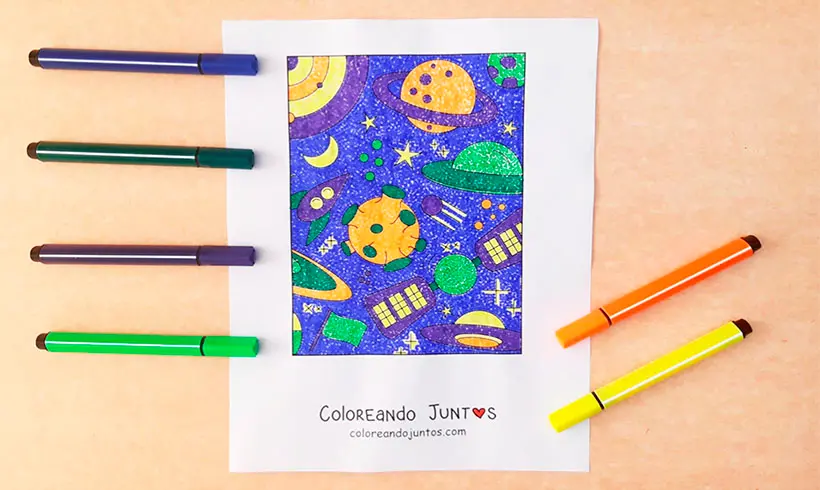
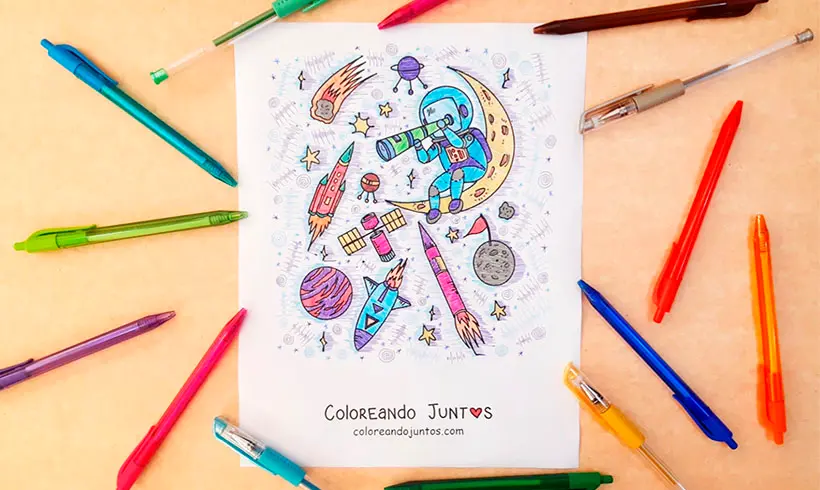
What do you think of our satellite? Do you think it transmits coloring pages of good quality? We painted it with many different tones so it can stand out in the vastness of space. We can't wait to see what tones you will use to make your satellites the most beautiful in the universe!
We would also love to see what materials and techniques you will use to paint all these satellite coloring pages.
How about a little glitter so they shine like a star? Or metallic-toned wooden pencils to give them a realistic touch? You could even use pieces of shiny paper to fill in their panels in a practical and fun way!
What better propellant than one fueled by imagination and art? Help us get our satellites up to the sky by coloring them the way only you know how. And in this gallery you will find a great variety of printable coloring pages!
You have at your disposal lots of drawings of artificial satellites, drawings of natural satellites and drawings of space satellites where you can showcase all your talent and creativity.
Don't forget to send us your best colored drawings! We will upload them to our website so artists from all over the world can admire them. You will become a star inside and outside our atmosphere!
Satellites coloring pages
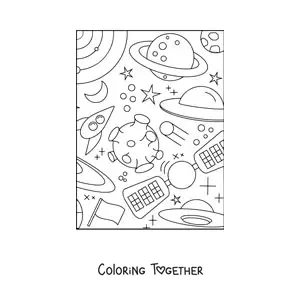
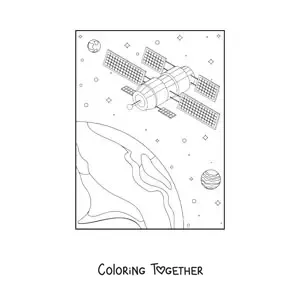
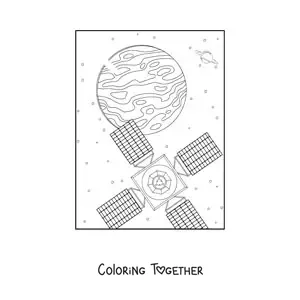
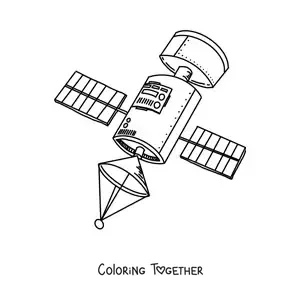
Why color pictures of satellites?
Natural satellites are celestial bodies that orbit around planets. The moon is the main example of a natural satellite.
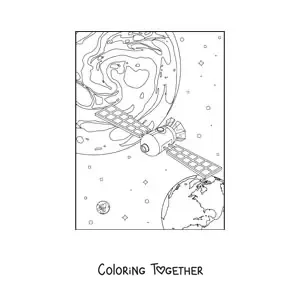
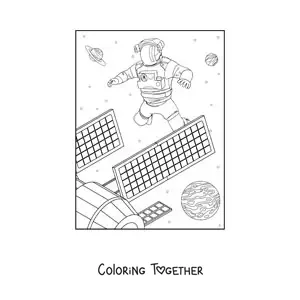
Artificial satellites represent the progress of humanity in engineering, astronomy, physics and mechanics. They allow us to carry out satellite telecommunications, navigation, photography and meteorology.
At Coloring Together we love everything related to satellites! And that is why we have put together this fabulous gallery of satellite coloring pages.
Are you a satellite lover too? Then you can't miss all the fun facts we have gathered for you! They go along with each of the satellite coloring pages and they are super fun and interesting.
Ready for liftoff? All that's left is for our best artist to give the green light to start our ambitious engineering project. Don't wait any longer and start coloring in that way you know takes us out of orbit!
Learn while coloring Satellites
- There are two types of satellites: natural satellites and artificial satellites. Natural satellites are celestial bodies that orbit around a planet and artificial satellites are objects created by human beings that are put into orbit.
- Did you know that the moon is the only natural satellite of planet Earth and the fifth largest in the entire Solar System? Amazing!
- The first artificial satellite that managed to be put into orbit was the Soviet satellite “Sputnik 1”. It was launched into space on October 4, 1957. Cool!
- On November 3, 1957, “Sputnik 2” was launched into space, the second artificial satellite put into orbit by human beings and the first to carry a living being. The crew member of this satellite was Laika, a mixed-breed dog that sadly died during the mission.
- Since the number of orbital positions is limited, each artificial satellite must request a specific orbital slot. Once the International Telecommunication Union assigns one, the satellite must stay there to avoid colliding with others.
- It is estimated that there are currently about 3,500 functional artificial satellites orbiting planet Earth. Most are of American, Russian, Japanese and Chinese origin.
- Did you know that there is an artificial satellite that can hold people inside? The International Space Station has a length of 73 meters, a width of 109 meters and has housed a crew of up to 11 passengers. Incredible!
- The first artificial satellite put into orbit by the United States of America and the third in all of human history was launched into space on January 31, 1958. It is known by the names “Explorer 1” or “1958 Alpha 1”. Cool!
- Did you know that there are artificial satellites so small they weigh less than 0.1 kilograms? These satellites of 100 grams or less are known as “femtosatellites” and promise to save on construction and launch costs.
- The oldest artificial satellite still in orbit is the “Vanguard 1” satellite. It was launched on March 17, 1958 and represents the second satellite put into orbit by the United States and the fourth in human history.