15 Cell Coloring Pages - Free!
Science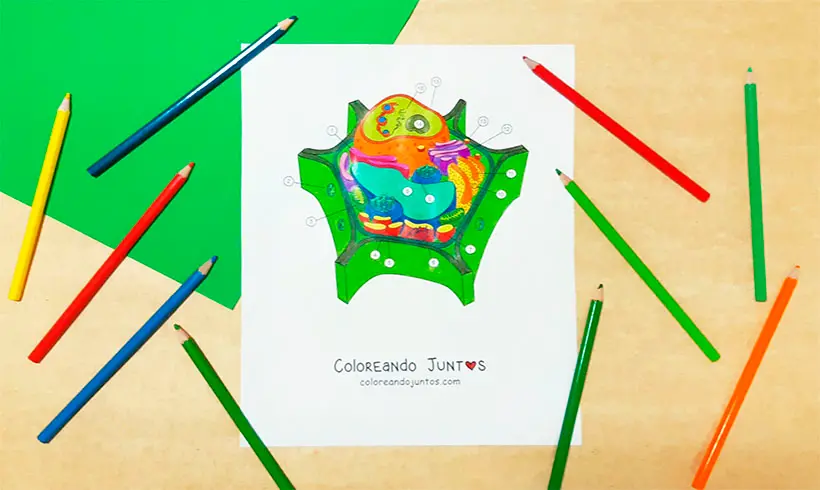
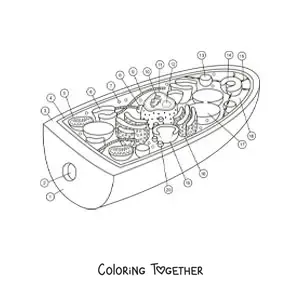
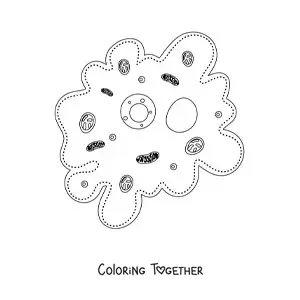
What do you think about the cell drawing we have colored? How many parts of this plant cell are you able to identify? Cells come in many different shapes, sizes, and colors, so this is the perfect opportunity to merge the diversity of art with the diversity of cells.
At Coloring Together we have all kinds of beautiful drawings to print and color! Check out each one of our amazing galleries and discover thousands of coloring pages of your favorite themes and characters.
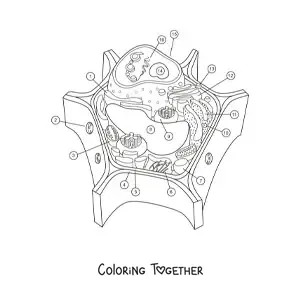
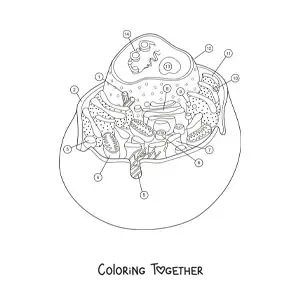
This gallery is dedicated to cells! In it you will find a huge variety of cell coloring pages; including drawings of animal cells, plant cells, eukaryotic cells, and prokaryotic cells. Wow, this is an extraordinary collection!
And the surprises are not over yet! Because besides offering you some beautiful cell images to color, we also have some fun facts to go with them that are so interesting you won't be able to stop reading them.
Have you ever seen cells with a microscope? They are spectacular! You could even say they are as beautiful as your drawings. We think it would be a waste not to show them to the world, so send us the best ones you have colored so that we can post them on our website!
Have you already thought about what materials and techniques you are going to use to paint these cells? You have as many options as cells in your body! Well, maybe we exaggerated a little… but that does not take away from the fact that you have a lot to work with. Take your ingenuity and creativity to the limit and show what an excellent artist you are!
Cells coloring pages
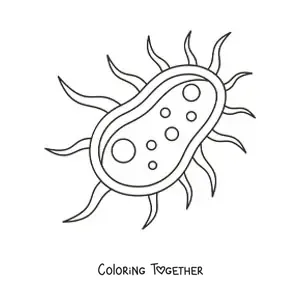
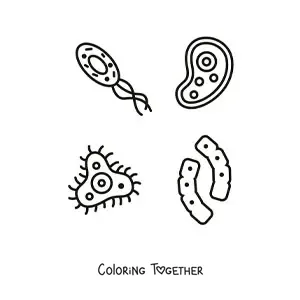
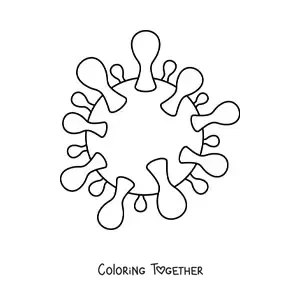
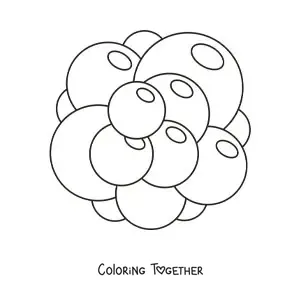
Why color cell images?
Cells are the morphological, physiological, and original unit. This means that they have a certain structure with organs that perform specific functions; and also, that they are responsible for life on Earth.
And the fact is we can't talk about living beings without referring directly to cells; because from the microscopic bacteria to the gigantic whales, all organisms are made up of at least one of them.
Did you know that cells can interact with each other and with their environment? They can feed, reproduce, excrete, and die. They are so diverse and complex that they keep scientists all over the world constantly interested. And we include ourselves!
Because at Coloring Together we feel so hooked on the subject that we decided to put together a gallery brimming with cell images to color.
Remember to read the fun facts that accompany each of the cell coloring pages! They are super interesting and educational; and the best way to learn many new things while we color together!
Let's get going! Look for a couple of white sheets so you can print the drawings you liked the most and bring all your art materials. We want you to unleash all your artistic talent and surprise us with a unique and different composition. Make your creativity the nucleus of all these cells!
Learn while coloring Cells
- The largest cell in the human body is the egg cell. It measures approximately 0.14 millimeters; and although it is visible to the naked eye, its size barely reaches that of the tip of a needle.
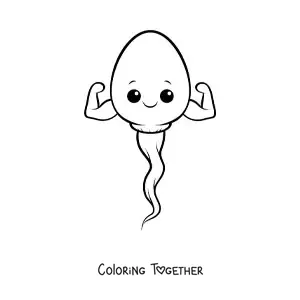
- The smallest cell in the human body is the sperm cell. It measures between 0.055 and 0.058 millimeters; and is produced in the male testicles in amounts that vary between 60 and 300 million sperm per ejaculation.
- According to their chromosome load, cells are classified into two large types: haploid and diploid. Haploid cells have 23 chromosomes and originate through meiosis. Diploid cells have 46 chromosomes and originate through mitosis.
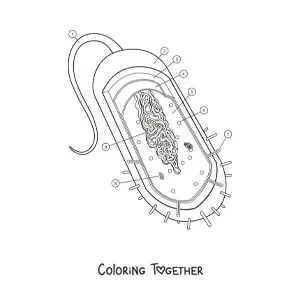
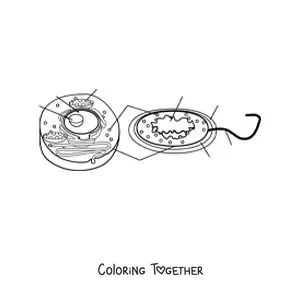
- According to their nucleus, cells are divided into two large types: eukaryotic and prokaryotic. Their main difference is that eukaryotic cells have a defined cell nucleus and prokaryotic cells do not.
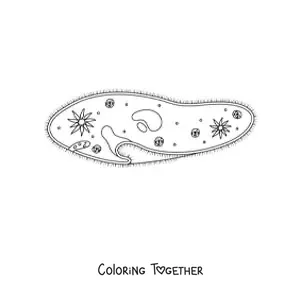
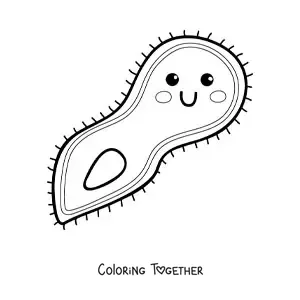
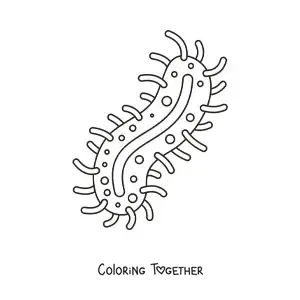
- Did you know that there are living beings made up of a single cell? Bacteria, archaea, some fungi, algae, and protists are organisms made up of nothing more than one cell.
- Did you know that the body of an adult human weighing 70 kilograms and measuring 1.70 meters tall is made up of approximately between 30 and 40 trillion cells? Incredible!
- The most abundant cells in the human body are red blood cells. Their function is to transport oxygen through the blood and they correspond to 84% of the total cells in our bodies.
- In the human body there are a ton of types of cells with different characteristics and functions! Some examples are erythrocytes, adipocytes, platelets, pneumocytes, osteoblasts, muscle cells, and endothelial cells.
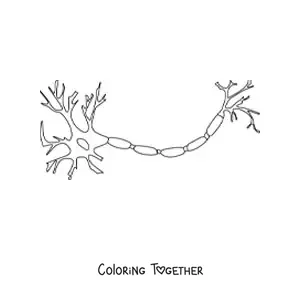
- Cells can have many different shapes, for example: neurons are star-shaped, sperm cells are elongated, endothelial cells are flattened, and plant cells have a characteristic polygonal shape.
- The smallest known cell is the bacterium Mycoplasma genitalium. It is a tiny parasite that causes sexually transmitted diseases and measures between 0.2 and 0.8 micrometers; which is equivalent to between 0.0002 and 0.0008 millimeters.
- With an approximate length of 15 centimeters and a weight of 1.5 kilograms, the unfertilized ostrich egg is the largest and heaviest known cell. Let's remember that eggs are the ova of birds, and therefore, they are sex cells.
- The longest known cell is the neuron of the blue whale. It is very thin and thanks to its axon it can measure up to 30 meters in length. It is longer than a basketball court!
- The word “cell” comes from the Latin “cellula” and means “cell” as in a small room. Its name is due to the fact that in 1665 the scientist Robert Hooke observed the cells of a plant tissue under the microscope; and thanks to their characteristic hexagonal shape, he saw a resemblance to the cells of a beehive.
- Did you know that inside cells there are tiny organs called “organelles”? Just like in large living beings, organelles are in charge of regulating and carrying out all the processes and functions of the cells.
- Did you know that cells can commit suicide? Apoptosis is a process in which a damaged cell programs its own destruction or “death” to avoid harming the organism of which it is a part.