25 Cactus Coloring Pages - Free!
Plants and Trees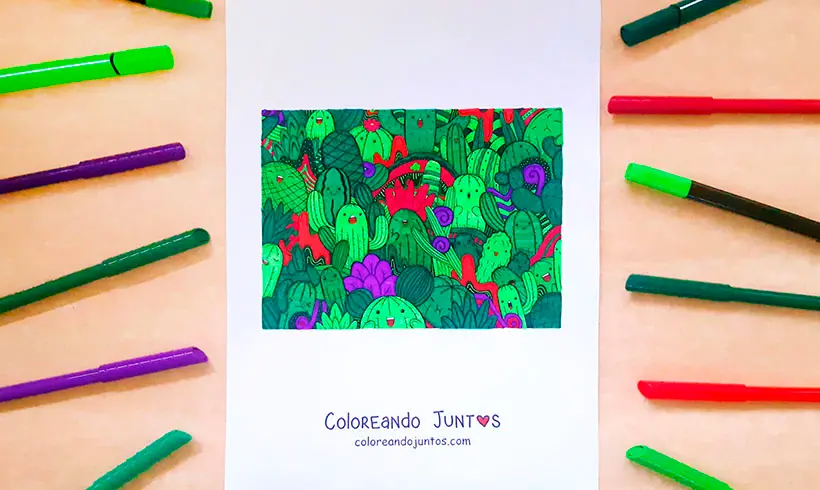
What do you think of our cacti? Based on their appearance, would you say they are friendly or that they will prick you with their spines if you get too close?
Although they look tough, our cacti are bursting with nothing but love and color! The only thing they will prick is your doubts about which printable coloring pages you will color today.
Of course, cactus coloring pages! And you have a ton at your disposal. You will be able to use all kinds of materials and apply countless techniques to make them look radiant.
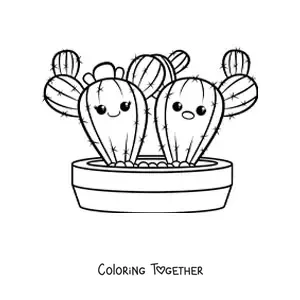
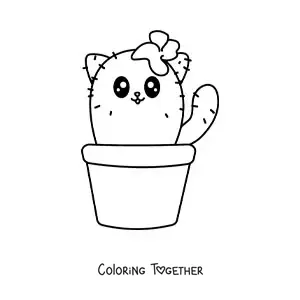
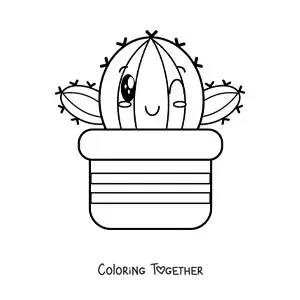
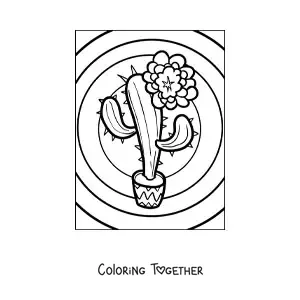
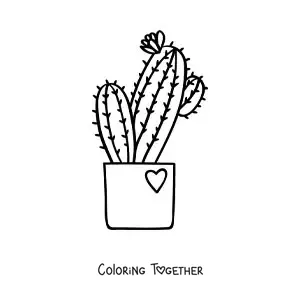
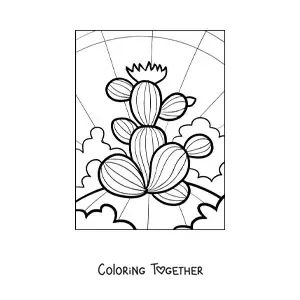
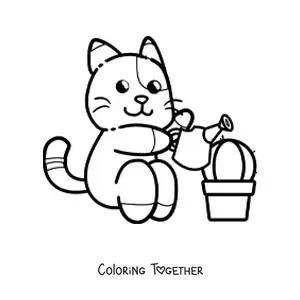
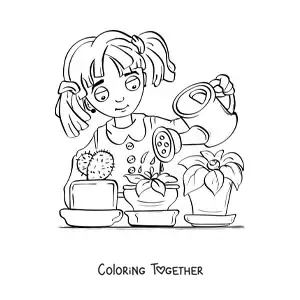
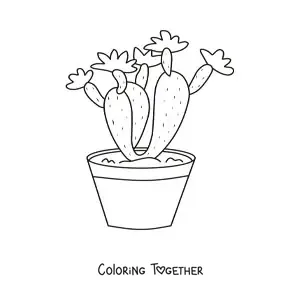
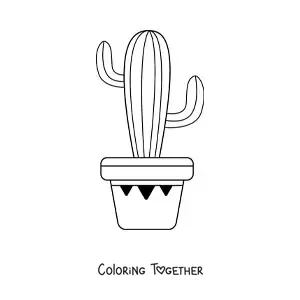
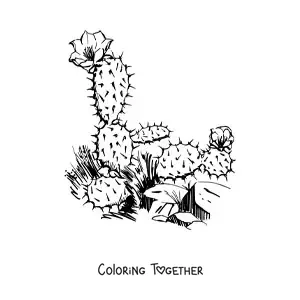
Take a look at our gallery! Choose your favorites from a great variety of kawaii cactus drawings, easy cactus drawings, and cactus drawings with flowers.
And when you finish coloring them like a true professional, send us your wonderful results! We will upload your works of art to Coloring Together so our great community of artists can marvel at your talent.
Ready to get started? These cactus pictures to color are downright prickly! Grab a couple of sheets of white paper and your art supplies and make them the center of attention of every desert, savanna, and garden in the world.
Cactus coloring pages
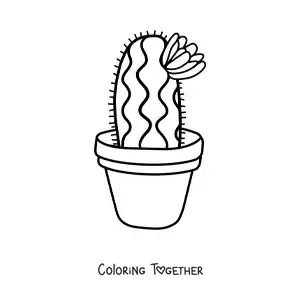
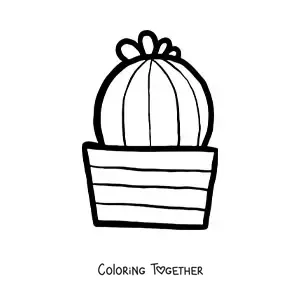
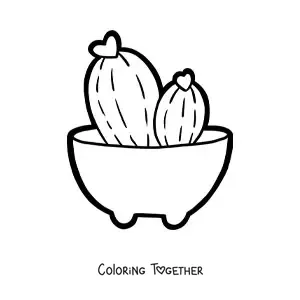
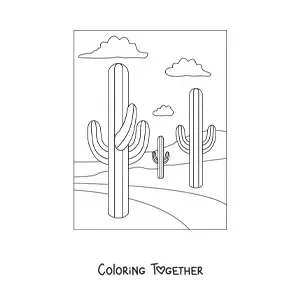

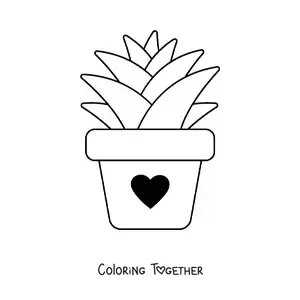
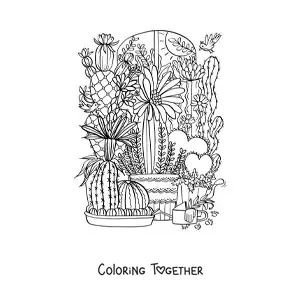

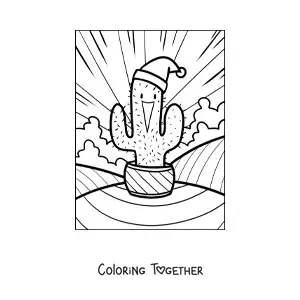
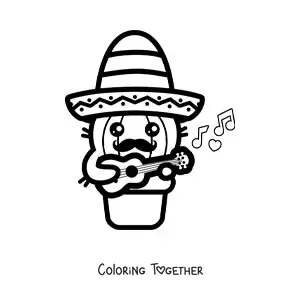
Why color cactus pictures?
Cacti are plants native to the Americas belonging to the Cactaceae family. They are known for being covered in spines and for withstanding droughts and high temperatures very well.
There are between 1,600 and more than 2,000 different species of cacti. The vast majority of them are grown as ornamental plants.
They are very long-lived beings and easy to care for! Thanks to their ability to store water, they can go up to two years without being watered.
Do you like cacti? Because we love them! And to celebrate their beauty, at Coloring Together we have decided to put together a spectacular gallery full of cactus coloring pages.
Spend a super fun afternoon coloring the best cactus pictures to color. And don't forget to read the fun facts we have for you! They are super interesting and will make you love cacti even more than you already do.
Learn while coloring Cactus
- The Knowlton's miniature cactus (Pediocactus knowltonii) is one of the rarest species that exist. It is a very small cactus that shows beautiful little pink flowers. It is found in the United States and is critically endangered.
- The tallest cactus found in the wild is a specimen of cardon cactus (Pachycereus pringlei) from the Sonoran Desert, Mexico. It was discovered in April 1995 by Marc Salak and Jeff Brown when it measured an impressive 19.2 meters tall.
- There is a cactus more than 33.5 meters tall! It is a specimen of Cereus peruvians that was planted in 2002 in Karnataka, India. It was measured in 2015, so today it is much taller.
- In 1978 an armless cactus 24 meters tall was documented in the state of Arizona. When it was knocked down in July 1986 by a storm, it was estimated to be more than 150 years old. Incredible!
- Did you know that dragon fruits come from a cactus? Also called pitahayas, they are the sweet fruits of the cacti of the genus Hylocereus. The most popular are the yellow pitahaya (Hylocereus megalanthus) and the pink pitahaya (Hylocereus undatus).
- Did you know that there are some cacti with edible parts? The prickly pears of the nopal (Opuntia ficus-indica) and the fruits of the saguaro (Carnegiea gigantea) and the cacti of the genus Hylocereus are some examples.
- Mexico is the country with the greatest diversity of cacti. It also has the largest cactus sanctuary in the world. It is located in Baja California Sur and is home to more than 50 different species. Cool!
- Did you know that there are cacti that can live more than 250 years? Incredible!
- Did you know that there are cacti that can weigh up to 12,000 kilograms? That is the equivalent of two adult African elephants!
- The roots of cacti are considerably longer than those of many other plants. A peculiarity of their roots is that they spread out horizontally.