15 Japanese Masks Coloring Pages - Free!
Masks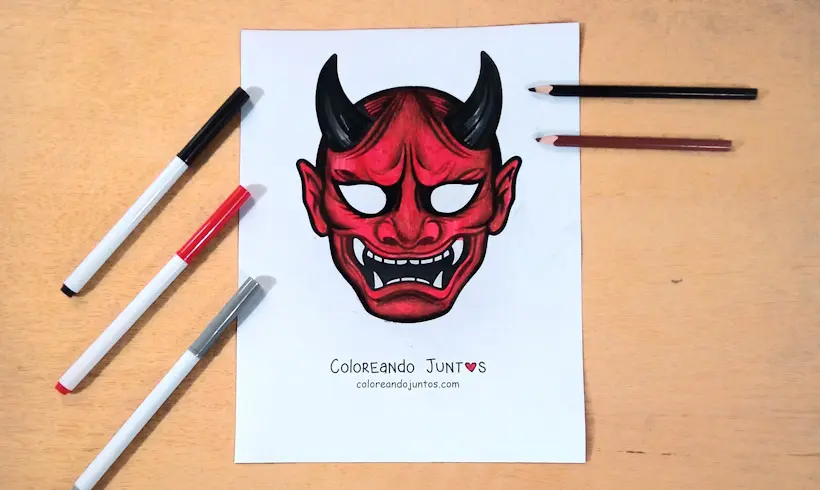
We hope that seeing this Japanese mask that we colored did not scare you. Do you like how it turned out? We used dry materials and the realistic technique to make it look this good. You should try it.
We want you to join us to explore the gallery we created for you, because in it we have Japanese masks coloring pages that will leave you wide-eyed. You will want to try them all on!
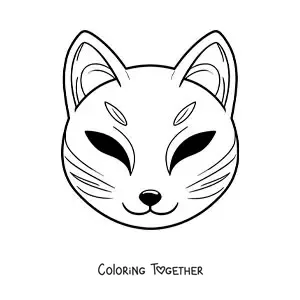
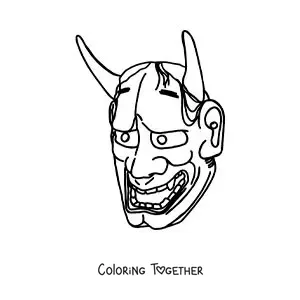
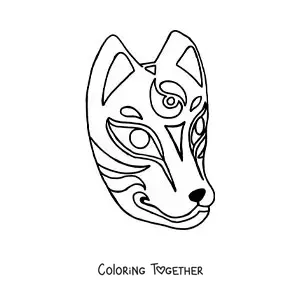
Or are you going to say that hannya Japanese masks do not appeal to you? Or the kitsune Japanese masks? Those are the most kawaii and sweet. But there are also demon Japanese masks, ideal for those who want to take a risk and step away from the cute.
Japanese masks are important to their culture, and interesting to everyone else, so if you want to paint them, do it with whatever technique you think is best; we know you will be able to create something beautiful with what you have on hand.
At Coloring Together we are dying to see the result of your effort, so when you finish painting the Japanese masks coloring images, do not forget to send us a photo. We will gladly share it!
It is time to start coloring; the Japanese masks for kids are waiting to be painted, because soon there will be a great festival where they will be put on display. Let's get to work!
Japanese Masks coloring pages
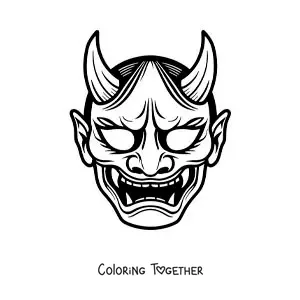
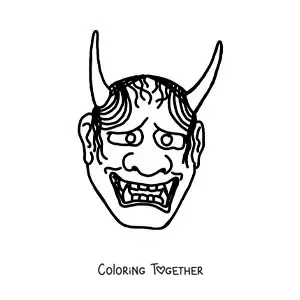
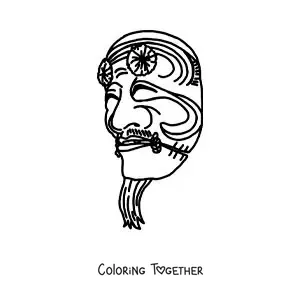
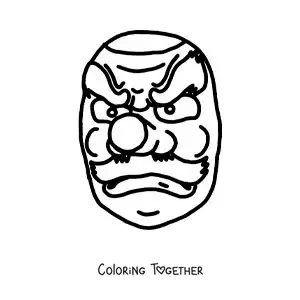
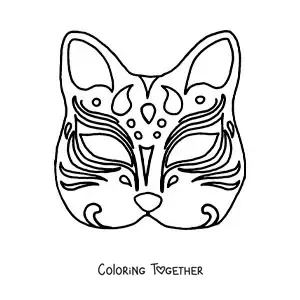
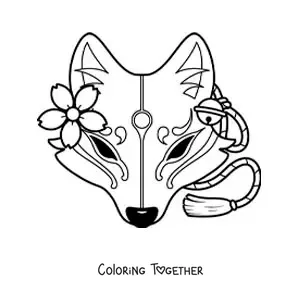
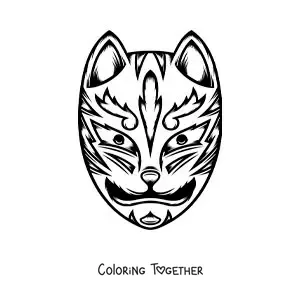
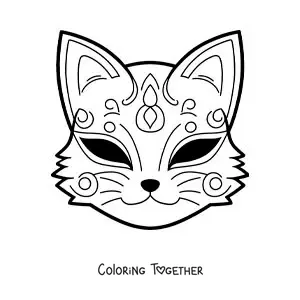
Why color japanese masks pictures?
Japanese masks are an important part of Japan's traditional culture. They have been used since ancient times in certain dances and rituals, festivals and ceremonies.
Some of the best-known masks are the Noh, the Kyogen and the Kabuki. The masks are used to represent the characters and to express their emotions.
In addition, Japanese masks are also popular in pop culture, like in anime and manga, where characters often wear masks to hide their identity or to represent a particular character.
Do you like Japanese masks? At Coloring Together we love them a lot, which is why we brought Japanese masks coloring pages with fun facts so you can learn a lot. Not to be missed!
Learn while coloring Japanese Masks
- Japanese masks date back thousands of years, and they were used for religious rituals, initiation ceremonies, theater, dance and protection.
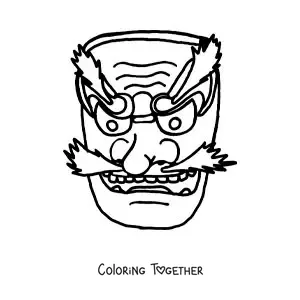
- One of the oldest Japanese masks is the Tengu mask, which represents a protective spirit of the mountains and forests, with a long, red nose.
- A very well-known Japanese mask is the Kitsune, which symbolizes the fox, a sacred and cunning animal in Shintoism. It is said that foxes can transform into humans and that they have magical powers.
- The Japanese Hannya mask is one of the most feared, as it represents a woman who has turned into a demon out of jealousy and rage. It has horns, fangs and a terrifying expression.
- The Japanese Okame mask represents a geisha with large cheekbones and a sweet smile. It is a symbol of beauty, kindness and feminine happiness.
- The Japanese Hyottoko mask is that of a man who blows fire through a bamboo tube, and who has a crooked face and uneven eyes. It is used at festivals to make people laugh with its comic dances.
- The Japanese Oni mask is that of an ogre or a troll, which has red, blue or green skin, horns, wild hair and a single eye. It is used to drive away evil spirits and illnesses.
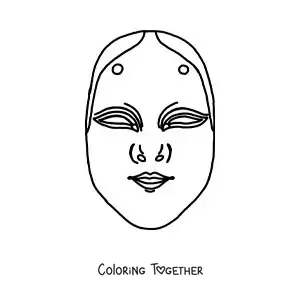
- The Japanese masks of Noh theater are some of the most refined and expressive, as they change according to the angle of the light and the actor's gesture. There are more than 200 types of Noh masks, which represent different characters, such as old men, women, warriors, gods or ghosts.
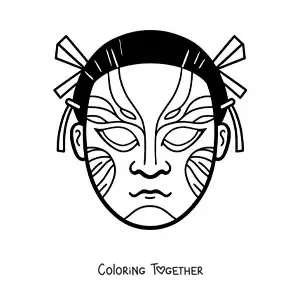
- In Kabuki theater, instead of masks a very colorful makeup painted on the face called kumadori is used. The Aragoto style, with its brave and exaggerated heroes, is achieved with thick lines of color, bold eyebrows and dramatic gestures.
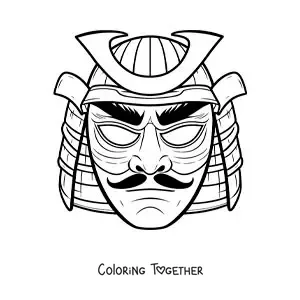
- Samurai masks, or mengu, are part of the armor of Japanese warriors, and they have a protective and decorative function. They usually have mustaches, beards and metal teeth, and sometimes incorporate elements of animals, such as ears or fangs.