10 Ironing Clothes Coloring Pages - Free!
Household Chores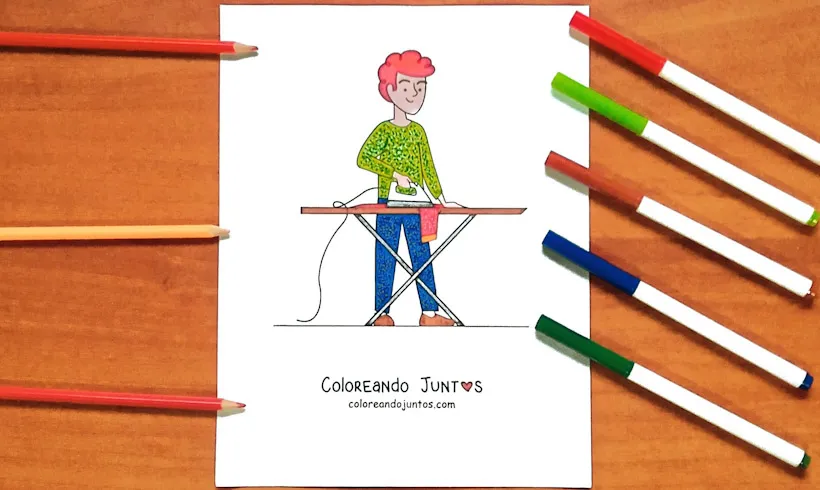
Have you already seen the drawing we colored this time? We made an effort to show that this household chore does not have to be boring. Do you have any idea in mind that you want to put into practice? This is the perfect opportunity for you to shine.
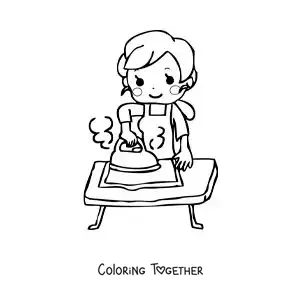
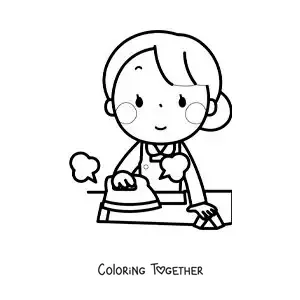
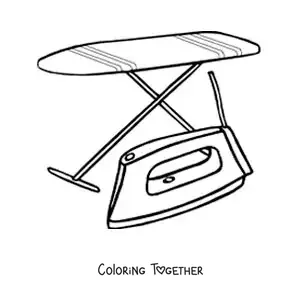
At Coloring Together we have chosen the best ironing clothes images to color with the goal of making your ironing days much more fun and, at the same time, letting you practice your skills as an artist.
And to make your clothes look their best, you can use the brushing technique with your favorite tempera paints. Your shirts will look great! Although if you prefer to use dry materials, you can use your wax crayons and color in layers to get better results.
Once you have finished bringing the ironing clothes images to color to life, send us a photo! We know that no one will forget to iron the clothes thanks to the impression your works of art will leave, so do not be shy. Let the world witness your talent.
You had better keep your materials close because it is not a good idea to leave the iron on for too long. So do not waste any more time! Nobody likes to wear a wrinkled garment.
Ironing Clothes coloring pages
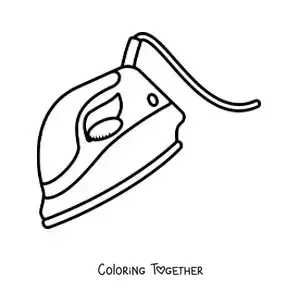
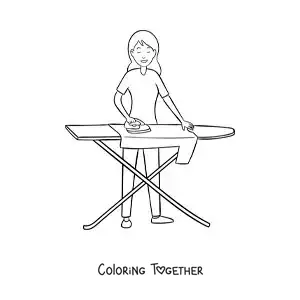
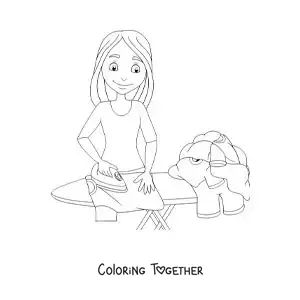
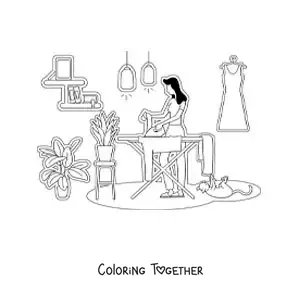
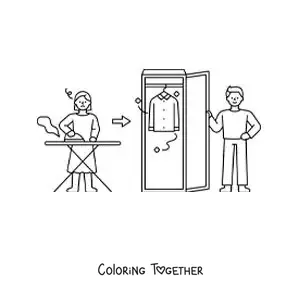
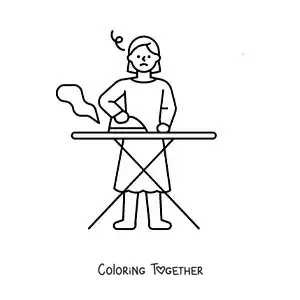
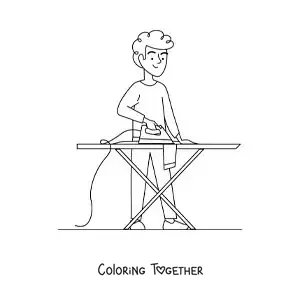
Why color ironing clothes pictures?
Usually, the iron is used to smooth out the wrinkles and creases in clothes, as well as to kill microorganisms that could cling to the skin. Depending on the material of the fabric, the temperature of the iron usually varies between 140 and 200 °C.
It is known that the Chinese in the 4th century smoothed silk with somewhat rudimentary irons. Their evolution went from heating iron plates directly over the fire, to irons fed with boiling water or gas, and in 1882 the first electric irons would arrive.
Since at Coloring Together we know you like to keep your clothes wrinkle-free, in this gallery we have collected the best ironing clothes images to color, that way this household chore will be much more fun to do.
Besides that, on top of each of the ironing clothes images to color, among other things, we have left you little tips about the best way to iron your garments and the benefits of ironing. So do not waste time, little artist. It is time to get to work!
Learn while coloring Ironing Clothes
- Ironing extends the useful life of clothing, since if it shrinks when washed, ironing lets you stretch it back out again.
- By applying heat to clothes while you iron, you are helping to eliminate germs that could be harmful to your health.
- Ironing helps get rid of any moisture residue that we cannot detect with our hands, that way you also prevent mold and fungus on your clothes.
- It is recommended that in addition to ironing your clothes, you take the time to iron your cushion covers and bedding to eliminate the microorganisms that could come into contact with your skin.
- In Argentina, on December 20th they celebrate the day of the wrinkled shirt, and although it may seem funny, this has the purpose of raising awareness about the energy that clothes irons consume, which have an estimated power of between 1,000 and 3,000 watts.
- The correct way to iron polyester garments is to turn them inside out and iron them very carefully.
- To iron wool garments, you should place a damp cloth on top so they do not end up shiny.
- It is recommended to iron linen garments while they are still damp. You can iron them right side out, but if they have embroidery, it is better to iron them inside out.
- A trick for ironing men's shirts is to start at the edges. First the collar, the sleeves, and continue from the outside toward the center.
- If you feel too lazy to iron the sheets, a little trick is to fold them before putting them in the dryer. They will come out without a single wrinkle!
- To master polo collars when ironing them, a little trick is to dampen them with a touch of vinegar.
- To better preserve the creases in clothes when ironing, a little trick is to turn them inside out and dampen them before ironing.
- The practice of ironing clothes is many centuries old. In fact, in the 4th century the Chinese used rudimentary irons to iron silk.
- The temperature of irons usually varies between 140 and 200 °C, depending on the type of fabric.
- In 1882, Henry W. Seely patented the first electric iron.